Books to Empower Your Understanding of Capitalism
Dive into these insightful reads that unravel the complexities of capitalism and its impact on society. Each book offers a unique perspective on how money shapes our world and what we can do to foster change. Equip yourself with knowledge and become an advocate for a more equitable future.

Talking to My Daughter About the Economy
225 pages
This book is easy to understand and serves as a great starting point for grasping modern economics and its implications for equality, making it a helpful read for diving into the topic.

Debt
709 pages
This book offers a fascinating exploration of the history of debt, revealing how it has shaped economies and societies over millennia.

Capitalist Realism
90 pages
It explores the feeling of helplessness linked to capitalism in a clever and accessible way, discussing how it feels inescapable and what we can do about it.

Mutual Aid
338 pages
It's about how it's in our nature to care for each other and the value of cooperation.

The Communist Manifesto (Diversion Classics)
51 pages
It's a short and easy read, showcasing Marx's charismatic writing, making it a great introduction to anti-capitalism.

The Conquest of Bread
327 pages
One of the current objections to Communism, and Socialism altogether, is that the idea is so old, and yet it has never been realized. Schemes of ideal States haunted the thinkers of Ancient Greece; later on, the early Christians joined in communist groups; centuries later, large communist brotherhoods came into existence during the Reform movement. Then, the same ideals were revived during the great English and French Revolutions; and finally, quite lately, in 1848, a revolution, inspired to a great extent with Socialist ideals, took place in France. "And yet, you see," we are told, "how far away is still the realization of your schemes. Don't you think that there is some fundamental error in your understanding of human nature and its needs?"At first sight this objection seems very serious. However, the moment we consider human history more attentively, it loses its strength. We see, first, that hundreds of millions of men have succeeded in maintaining amongst themselves, in their village communities, for many hundreds of years, one of the main elements of Socialismthe common ownership of the chief instrument of production, the land, and the apportionment of the same according to the labour capacities of the different families; and we learn that if the communal possession of the land has been destroyed in Western Europe, it was not from within, but from without, by the governments which created a land monopoly in favour of the nobility and the middle classes.

The Accumulation of Capital
581 pages
Rosa Luxemburg was a revolutionary socialist who fought and died for her beliefs. In January 1919, after being arrested for her involvement in a workers' uprising in Berlin, she was brutally murdered by a group of right-wing soldiers. Her body was recovered days later from a canal. Six years earlier she had published what was undoubtedly her finest

23 Things They Don't Tell You About Capitalism
305 pages
Chang's insights challenge conventional wisdom about capitalism, making it a thought-provoking read for anyone curious about economic realities.

The Shock Doctrine
588 pages
This book provides a deep understanding of how economic shocks can shape societies and personal experiences.


The Culture of Narcissism: American Life in an Age of Diminishing Expectations
306 pages
When The Culture of Narcissism was first published, it was clear that Christopher Lasch had identified something important: what was happening to American society in the wake of the decline of the family over the last century. The book quickly became a bestseller. This edition includes a new afterword, "The Culture of Narcissism Revisited."

Capital in the Twenty-First Century
696 pages
This book offers a deep dive into economic inequality, making it essential for anyone interested in understanding the dynamics of wealth distribution in modern society.
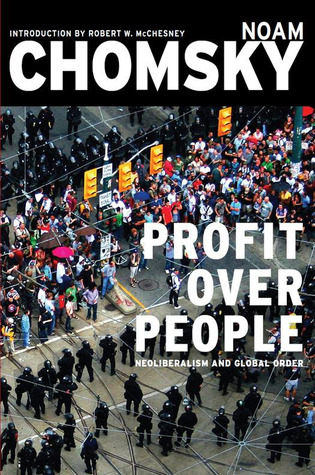
Profit Over People
177 pages
Why is the Atlantic slowly filling with crude petroleum, threatening a millions-of-years-old ecological balance? Why did traders at prominent banks take high-risk gambles with the money entrusted to them by hundreds of thousands of clients around the world, expanding and leveraging their investments to the point that failure led to a global financial crisis that left millions of people jobless and hundreds of cities economically devastated? Why would the world’s most powerful military spend ten years fighting an enemy that presents no direct threat to secure resources for corporations? The culprit in all cases is neoliberal ideology—the belief in the supremacy of "free" markets to drive and govern human affairs. And in the years since the initial publication of Noam Chomsky’s Profit Over People: Neoliberalism and Global Order, the bitter vines of neoliberalism have only twisted themselves further into the world economy, obliterating the public’s voice in public affairs and substituting the bottom line in place of people’s basic obligation to care for one another as ends in themselves. In Profit Over People, Chomsky reveals the roots of the present crisis, tracing the history of neoliberalism through an incisive analysis of free trade agreements of the 1990s, the World Trade Organization, and the International Monetary Fund—and describes the movements of resistance to the increasing interference by the private sector in global affairs. In the years since the initial publication of Profit Over People, the stakes have only risen. Now more than ever, Profit Over People is one of the key texts explaining how the crisis facing us operates—and how, through Chomsky’s analysis of resistance, we may find an escape from the closing net.

SAPIENS - Eine kurze Geschichte der Menschheit
533 pages
This book offers a fascinating exploration of how humanity has evolved and how our understanding of money and society has changed over time.

Atomic Habits
321 pages
This book provides insights into how to develop better habits that can lead to a more fulfilling and less frustrating life.

Money
222 pages
It's a fascinating and entertaining read that explores the evolution of money throughout history, making it accessible even for those without prior knowledge on the subject.

The Wealth of Nations
1185 pages
It's an absolute tome worth reading, as Adam Smith explores the ethical dilemmas posed by economics.

The Theory of Moral Sentiments
370 pages
This is Smith's definitive work on human morality, perfect for those who can handle more reading after The Wealth of Nations.

Sacred Economics
497 pages
This book offers a deep understanding of money from both technical and spiritual perspectives, exploring how it functions and how it could be transformed.

Poor Economics
456 pages
This book offers a hopeful perspective on economics and poverty, showcasing innovative ideas from the Nobel Prize-winning authors that make it a must-read.

Manufacturing Consent
482 pages
This book provides a deep understanding of western propaganda, making it essential for anyone looking to grasp the complexities of media influence.

Confessions of an Economic Hit Man
368 pages
"Economic hit men,” John Perkins writes, “are highly paid professionals who cheat countries around the globe out of trillions of dollars. Their tools include fraudulent financial reports, rigged elections, payoffs, extortion, sex, and murder.” John Perkins should know—he was an economic hit man. His job was to convince countries that are strategically important to the U.S.—from Indonesia to Panama—to accept enormous loans for infrastructure development, and to make sure that the lucrative projects were contracted to U. S. corporations. Saddled with huge debts, these countries came under the control of the United States government, World Bank and other U.S.-dominated aid agencies that acted like loan sharks—dictating repayment terms and bullying foreign governments into submission. This New York Times bestseller exposes international intrigue, corruption, and little-known government and corporate activities that have dire consequences for American democracy and the world. It is a compelling story that also offers hope and a vision for realizing the American dream of a just and compassionate world that will bring us greater security.

On the Reproduction of Capitalism
389 pages
It's a great read that offers deep insights into the mechanisms of capitalism.

Capitalist Realism
90 pages
After 1989, capitalism has successfully presented itself as the only realistic political-economic system - a situation that the bank crisis of 2008, far from ending, actually compounded. The book analyses the development and principal features of this capitalist realism as a lived ideological framework. Using examples from politics, films, fiction, work and education, it argues that capitalist realism colours all areas of contemporary experience. But it will also show that, because of a number of inconsistencies and glitches internal to the capitalist reality program capitalism in fact is anything but realistic.

A People's Guide to Capitalism
289 pages
This book is a great starting point for those new to capitalism, as it simplifies complex ideas and references Marx's Capital in an accessible way.

The Witches Are Coming
202 pages
Lindy West's The Witches are Coming is a must-read for its insightful breakdown of pressing issues like climate change and corporate greed, all delivered with her signature humor. It's an enjoyable read that reminds us of our worth and the importance of fighting for change.

The Shock Doctrine
704 pages
This book is also good, providing a critical look at how crises are exploited for economic gain.

A People's History of the United States
675 pages
THE CLASSIC NATIONAL BESTSELLER "A wonderful, splendid book—a book that should be read by every American, student or otherwise, who wants to understand his country, its true history, and its hope for the future." –Howard Fast Historian Howard Zinn’s A People’s History of the United States chronicles American history from the bottom up, throwing out the official narrative taught in schools—with its emphasis on great men in high places—to focus on the street, the home, and the workplace. Known for its lively, clear prose as well as its scholarly research, it is the only volume to tell America's story from the point of view of—and in the words of—America's women, factory workers, African-Americans, Native Americans, the working poor, and immigrant laborers. As Zinn shows, many of our country's greatest battles—the fights for a fair wage, an eight-hour workday, child-labor laws, health and safety standards, universal suffrage, women's rights, racial equality—were carried out at the grassroots level, against bloody resistance. Covering Christopher Columbus's arrival through President Clinton's first term, A People's History of the United States features insightful analysis of the most important events in our history. This edition also includes an introduction by Anthony Arnove, who wrote, directed, and produced The People Speak with Zinn and who coauthored, with Zinn, Voices of a People’s History of the United States.