Discover the Unexpected Depths of Non-Fiction
Dive into books that may seem mundane at first glance but reveal captivating insights about the world around us. These selections will transform your perception of non-fiction, showing you that even the most unassuming topics can be profoundly engaging. Don't miss out on these hidden gems that will leave you wanting more!

Salt
500 pages
You might think a book about salt wouldn't be captivating, but it turns out to be really, really interesting!

The Professor and the Madman
266 pages
A book about the invention of dictionaries might sound boring, but it's actually really interesting!

Stiff
310 pages
While cadavers may not be the most uplifting topic, the book is absolutely fascinating.

The Poisoner's Handbook
338 pages
Equal parts true crime, twentieth-century history, and science thriller, The Poisoner's Handbook is "a vicious, page-turning story that reads more like Raymond Chandler than Madame Curie." —The New York Observer “The Poisoner’s Handbook breathes deadly life into the Roaring Twenties.” —Financial Times “Reads like science fiction, complete with suspense, mystery and foolhardy guys in lab coats tipping test tubes of mysterious chemicals into their own mouths.” —NPR: What We're Reading A fascinating Jazz Age tale of chemistry and detection, poison and murder, The Poisoner's Handbook is a page-turning account of a forgotten era. In early twentieth-century New York, poisons offered an easy path to the perfect crime. Science had no place in the Tammany Hall-controlled coroner's office, and corruption ran rampant. However, with the appointment of chief medical examiner Charles Norris in 1918, the poison game changed forever. Together with toxicologist Alexander Gettler, the duo set the justice system on fire with their trailblazing scientific detective work, triumphing over seemingly unbeatable odds to become the pioneers of forensic chemistry and the gatekeepers of justice. In 2014, PBS's AMERICAN EXPERIENCE released a film based on The Poisoner's Handbook.

The Indifferent Stars Above LP
580 pages
This book offers a gripping tale of survival and the extreme lengths people will go to in dire situations, set against the harsh backdrop of the Sierra Nevada mountains.

The Immortal Life of Henrietta Lacks
410 pages
It's an incredible read that delves into the life of Henrietta Lacks and the impact of her cells on medical research.

The Glass Castle
320 pages
This memoir also reads like fiction, drawing readers into its compelling narrative.


Born to Run
334 pages
This book is so well written that I would listen to the audiobook over and over when I was a runner.

Saints, Sinners, and Sovereign Citizens
257 pages
As a former Mormon, I found this book fascinating, and my husband, who isn't, enjoyed it too. Krakauer's storytelling is always engaging.

Crisis in the Red Zone
401 pages
I read this during quarantine, and despite it not being the best timing, it was so enthralling that I couldn't put it down.

The Journey of Desire
256 pages
Krakauer's account of a deadly Mount Everest expedition is gripping and showcases his talent for storytelling.

Midnight in Chernobyl
560 pages
This book offers a gripping account of the Chernobyl disaster, making it a must-read for anyone interested in history and the impact of nuclear power.

The Disappearing Spoon
333 pages
It's a fascinating history of the periodic table that truly captivates!

The Rise and Fall of the Dinosaurs
391 pages
The Times Science Book of the Year. A Sunday Times Bestseller. 66 million years ago the dinosaurs were wiped from the face of the earth. Today, Dr. Steve Brusatte, one of the leading scientists of a new generation of dinosaur hunters, is piecing together the complete story of how the dinosaurs ruled the earth for 150 million years. The world of the dinosaurs has fascinated on book and screen for decades – from early science fiction classics like The Lost World, to Godzilla terrorizing the streets of Tokyo, and the monsters of Jurassic Park. But what if we got it wrong? In The Rise and Fall of the Dinosaurs, top dinosaur expert Brusatte, tells the real story of how dinosaurs rose to dominate the planet. Using the fossil clues that have been gathered using state of the art technology, Brusatte follows these magnificent creatures from their beginnings in the Early Triassic period, through the Jurassic period to their final days in the Cretaceous and the legacy that they left behind. Along the way, Brusatte introduces us to modern day dinosaur hunters and gives an insight into what it’s like to be a paleontologist. He reveals thrilling accounts of some of his personal discoveries, including primitive human-sized tyrannosaurs, monstrous carnivores even larger than T. rex, and feathered raptor dinosaurs preserved in lava from China. At a time when Homo sapiens has existed for less than 200,000 years and we are already talking about planetary extinction, The Rise and Fall of the Dinosaurs is a timely reminder of what humans can learn from the magnificent creatures who ruled the earth before us. 'Thrilling . . . the best book on the subject written for the general reader since the 1980s.' - The Sunday Times

The Power Broker
1337 pages
This biography of Robert Moses reveals the intricate dynamics of power, civics, and government in a captivating manner that will enlighten readers.

The Box
540 pages
This book dives into the fascinating history of shipping containers, revealing unexpected stories of dock turf wars, logistics challenges, and profiteers, making it far more engaging than it seems at first glance!

Consider the Fork
354 pages
Award-winning food writer Bee Wilson's secret history of kitchens, showing how new technologies - from the fork to the microwave and beyond - have fundamentally shaped how and what we eat. Since prehistory, humans have braved sharp knives, fire, and grindstones to transform raw ingredients into something delicious -- or at least edible. But these tools have also transformed how we consume, and how we think about, our food. In Consider the Fork, award-winning food writer Bee Wilson takes readers on a wonderful and witty tour of the evolution of cooking around the world, revealing the hidden history of objects we often take for granted. Technology in the kitchen does not just mean the Pacojets and sous-vide machines of the modern kitchen, but also the humbler tools of everyday cooking and eating: a wooden spoon and a skillet, chopsticks and forks. Blending history, science, and personal anecdotes, Wilson reveals how our culinary tools and tricks came to be and how their influence has shaped food culture today. The story of how we have tamed fire and ice and wielded whisks, spoons, and graters, all for the sake of putting food in our mouths, Consider the Fork is truly a book to savor.

The Molecule of More
199 pages
Why are we obsessed with the things we want only to be bored when we get them? Why is addiction perfectly logical to an addict? Why does love change so quickly from passion to indifference? Why are some people die-hard liberals and others hardcore conservatives? Why are we always hopeful for solutions even in the darkest times—and so good at figuring them out? The answer is found in a single chemical in your brain: dopamine. Dopamine ensured the survival of early man. Thousands of years later, it is the source of our most basic behaviors and cultural ideas—and progress itself. Dopamine is the chemical of desire that always asks for more—more stuff, more stimulation, and more surprises. In pursuit of these things, it is undeterred by emotion, fear, or morality. Dopamine is the source of our every urge, that little bit of biology that makes an ambitious business professional sacrifice everything in pursuit of success, or that drives a satisfied spouse to risk it all for the thrill of someone new. Simply put, it is why we seek and succeed; it is why we discover and prosper. Yet, at the same time, it's why we gamble and squander. From dopamine's point of view, it's not the having that matters. It's getting something—anything—that's new. From this understanding—the difference between possessing something versus anticipating it—we can understand in a revolutionary new way why we behave as we do in love, business, addiction, politics, religion—and we can even predict those behaviors in ourselves and others. In The Molecule of More: How a Single Chemical in Your Brain Drives Love, Sex, and Creativity—and will Determine the Fate of the Human Race, George Washington University professor and psychiatrist Daniel Z. Lieberman, MD, and Georgetown University lecturer Michael E. Long present a potentially life-changing proposal: Much of human life has an unconsidered component that explains an array of behaviors previously thought to be unrelated, including why winners cheat, why geniuses often suffer with mental illness, why nearly all diets fail, and why the brains of liberals and conservatives really are different.

Seven and a Half Lessons About the Brain
172 pages
'Highly accessible, content-rich and eminently readable . . . Fascinating and informative . . . popular science at its best.' - The Observer Have you ever wondered why you have a brain? Let renowned neuroscientist Lisa Feldman Barrett, bestselling author of How Emotions Are Made, demystify that big grey blob between your ears . . . In seven short chapters (plus a brief history of how brains evolved), this slim, entertaining, and accessible book reveals mind-expanding lessons from the front lines of neuroscience research. You’ll learn where brains came from, how they’re structured (and why it matters), and how yours works in tandem with other brains to create everything you experience. Along the way, you’ll also learn to dismiss popular myths such as the idea of a 'lizard brain' and the alleged battle between thoughts and emotions, or even between nature and nurture, to determine your behaviour. Sure to intrigue casual readers and scientific veterans alike, Seven and a Half Lessons About the Brain is full of surprises, humour, and important implications for human nature - a gift of a book about our most complex and crucial organ. 'Subtly radical . . . It presents a revelatory model of consciousness that will be completely new to most readers' - The Guardian

The Body
351 pages
#1 Bestseller in both hardback and paperback: SHORTLISTED FOR THE 2020 ROYAL SOCIETY INSIGHT INVESTMENT SCIENCE BOOK PRIZE _______ 'A directory of wonders.' - The Guardian 'Jaw-dropping.' - The Times 'Classic, wry, gleeful Bryson...an entertaining and absolutely fact-rammed book.' - The Sunday Times 'It is a feat of narrative skill to bake so many facts into an entertaining and nutritious book.' - The Daily Telegraph _______ 'We spend our whole lives in one body and yet most of us have practically no idea how it works and what goes on inside it. The idea of the book is simply to try to understand the extraordinary contraption that is us.' Bill Bryson sets off to explore the human body, how it functions and its remarkable ability to heal itself. Full of extraordinary facts and astonishing stories The Body: A Guide for Occupants is a brilliant, often very funny attempt to understand the miracle of our physical and neurological make up. A wonderful successor to A Short History of Nearly Everything, this new book is an instant classic. It will have you marvelling at the form you occupy, and celebrating the genius of your existence, time and time again. 'What I learned is that we are infinitely more complex and wondrous, and often more mysterious, than I had ever suspected. There really is no story more amazing than the story of us.' Bill Bryson

Boom Town
455 pages
It's a history of Oklahoma City that is way more entertaining than you would expect.

Talking to Strangers
319 pages
Malcolm Gladwell, host of the podcast Revisionist History and author of the #1 New York Times bestseller Outliers, offers a powerful examination of our interactions with strangers and why they often go wrong—now with a new afterword by the author. A Best Book of the Year: The Financial Times, Bloomberg, Chicago Tribune, and Detroit Free Press How did Fidel Castro fool the CIA for a generation? Why did Neville Chamberlain think he could trust Adolf Hitler? Why are campus sexual assaults on the rise? Do television sitcoms teach us something about the way we relate to one another that isn’t true? Talking to Strangers is a classically Gladwellian intellectual adventure, a challenging and controversial excursion through history, psychology, and scandals taken straight from the news. He revisits the deceptions of Bernie Madoff, the trial of Amanda Knox, the suicide of Sylvia Plath, the Jerry Sandusky pedophilia scandal at Penn State University, and the death of Sandra Bland—throwing our understanding of these and other stories into doubt. Something is very wrong, Gladwell argues, with the tools and strategies we use to make sense of people we don’t know. And because we don’t know how to talk to strangers, we are inviting conflict and misunderstanding in ways that have a profound effect on our lives and our world. In his first book since his #1 bestseller David and Goliath, Malcolm Gladwell has written a gripping guidebook for troubled times.

The World Until Yesterday
409 pages
From the author of No.1 international bestseller Collapse, a mesmerizing portrait of the human past that offers profound lessons for how we can live today Visionary, prize-winning author Jared Diamond changed the way we think about the rise and fall of human civilizations with his previous international bestsellers Guns, Germs and Steel and Collapse. Now he returns with another epic - and groundbreaking - journey into our rapidly receding past. In The World Until Yesterday, Diamond reveals how traditional societies around the world offer an extraordinary window onto how our ancestors lived for the majority of human history - until virtually yesterday, in evolutionary terms - and provide unique, often overlooked insights into human nature. Drawing extensively on his decades working in the jungles of Papua New Guinea, Diamond explores how tribal societies approach essential human problems, from childrearing to conflict resolution to health, and discovers we have much to learn from traditional ways of life. He unearths remarkable findings - from the reason why modern afflictions like diabetes, obesity and Alzheimer's are virtually non-existent in tribal societies to the surprising benefits of multilingualism. Panoramic in scope and thrillingly original, The World Until Yesterday provides an enthralling first-hand picture of the human past that also suggests profound lessons for how to live well today. Jared Diamond is the Pulitzer Prize-winning author of the seminal million-copy-bestseller Guns, Germs, and Steel, which was named one of TIME's best non-fiction books of all time, and Collapse, a #1 international bestseller. A professor of geography at UCLA and noted polymath, Diamond's work has been influential in the fields of anthropology, biology, ornithology, ecology and history, among others.

Hue 1968
682 pages
Times September 2018 paperbacks A New York Times bestseller Bowden's most ambitious work yet, Hue 1968 is the story of the centrepiece of the Tet Offensive and a turning point in the American war in Vietnam. By January 1968, despite an influx of half a million American troops, the fighting in Vietnam seemed to be at a stalemate.Yet General William Westmoreland, commander of American forces, announced a new phase of the war in which 'the end begins to come into view.' The North Vietnamese had different ideas. In mid-1967, the leadership in Hanoi had started planning an offensive intended to win the war in a single stroke. Part military action and part popular uprising, the Tet Offensive included attacks across South Vietnam, but the most dramatic and successful would be the capture of Hue, the country's cultural capital. At 2:30 a.m. on January 31, 10,000 National Liberation Front troops descended from hidden camps and surged across the city of 140,000. By morning, all of Hue was in Front hands save for two small military outposts. The commanders in country and politicians in Washington refused to believe the size and scope of the Front's presence. Captain Chuck Meadows was ordered to lead his 160-marine Golf Company against thousands of enemy troops in the first attempt to re-enter Hue later that day. After several futile and deadly days, Lieutenant Colonel Ernie Cheatham would finally come up with a strategy to retake the city, block by block and building by building, in some of the most intense urban combat since World War II. With unprecedented access to war archives in the U.S. and Vietnam and interviews with participants from both sides, Bowden narrates each stage of this crucial battle through multiple points of view. Played out over twenty-four days of terrible fighting and ultimately costing 10,000 combatant and civilian lives, the Battle of Hue was by far the bloodiest of the entire war. When it ended, the American debate was never again about winning, only about how to leave. In Hue 1968, Bowden masterfully reconstructs this pivotal moment in the American war in Vietnam.

The Prize
1094 pages
The Prize recounts the panoramic history of oil -- and the struggle for wealth power that has always surrounded oil. This struggle has shaken the world economy, dictated the outcome of wars, and transformed the destiny of men and nations. The Prize is as much a history of the twentieth century as of the oil industry itself. The canvas of this history is enormous -- from the drilling of the first well in Pennsylvania through two great world wars to the Iraqi invasion of Kuwait and Operation Desert Storm. The cast extends from wildcatters and rogues to oil tycoons, and from Winston Churchill and Ibn Saud to George Bush and Saddam Hussein. The definitive work on the subject of oil and a major contribution to understanding our century, The Prize is a book of extraordinary breadth, riveting excitement -- and great importance.

Sapiens
354 pages
'Interesting and provocative... It gives you a sense of how briefly we've been on this Earth' Barack Obama What makes us brilliant? What makes us deadly? What makes us Sapiens? One of the world's preeminent historians and thinkers, Yuval Noah Harari challenges everything we know about being human. Earth is 4.5 billion years old. In just a fraction of that time, one species among countless others has conquered it: us. In this bold and provocative book, Yuval Noah Harari explores who we are, how we got here and where we're going. **ONE OF THE GUARDIAN'S 100 BEST BOOKS OF THE 21st CENTURY** PRAISE FOR SAPIENS: 'Jaw-dropping from the first word to the last... It may be the best book I've ever read' Chris Evans 'Startling... It changes the way you look at the world' Simon Mayo 'I would recommend Sapiens to anyone who's interested in the history and future of our species' Bill Gates Over 2 million copies sold since publication [Nielsen BookScan UK, Circana BookScan US, April 2024]

The Elegant Universe: Superstrings, Hidden Dimensions, and the Quest for the Ultimate Theory (25th Anniversary Edition)
369 pages
NATIONAL BESTSELLER Finalist for the Pulitzer Prize A new edition of the iconic bestseller that introduced legions to modern physics and the quest for the ultimate understanding of the cosmos, featuring a new preface and epilogue. With a rare blend of scientific insight and writing as graceful as the theories it so deftly explains, The Elegant Universe remains the unrivaled account of the modern search for the deepest laws of nature: “a standard that will be hard to beat” (George Johnson, New York Times Book Review). In this new 25th anniversary edition, renowned physicist and author Brian Greene—“the single best explainer of abstruse concepts in the world today” (Washington Post)—updates his classic work with a new preface and epilogue summarizing the significant theoretical and experimental developments over the past quarter-century. From established science, including relativity and quantum mechanics, to the cutting edge of thinking on black holes, string theory, and quantum gravity, The Elegant Universe makes some of the most sophisticated concepts ever contemplated thoroughly accessible and entertaining, bringing us closer than ever to comprehending how the universe works.

In the Heart of the Sea
353 pages
From the author of Mayflower, Valiant Ambition, and In the Hurricane's Eye--the riveting bestseller tells the story of the true events that inspired Melville's Moby-Dick. Winner of the National Book Award, Nathaniel Philbrick's book is a fantastic saga of survival and adventure, steeped in the lore of whaling, with deep resonance in American literature and history. In 1820, the whaleship Essex was rammed and sunk by an angry sperm whale, leaving the desperate crew to drift for more than ninety days in three tiny boats. Nathaniel Philbrick uses little-known documents and vivid details about the Nantucket whaling tradition to reveal the chilling facts of this infamous maritime disaster. In the Heart of the Sea, recently adapted into a major feature film starring Chris Hemsworth, is a book for the ages.

The Great Bridge
654 pages
First published in 1972, The Great Bridge is the classic account of one of the greatest engineering feats of all time. Winning acclaim for its comprehensive look at the building of the Brooklyn Bridge, this book helped cement David McCullough's reputation as America's preeminent social historian. Now, The Great Bridge is reissued as a Simon & Schuster Classic Edition with a new introduction by the author. This monumental book brings back for American readers the heroic vision of the America we once had. It is the enthralling story of one of the greatest events in our nation's history during the Age of Optimism -- a period when Americans were convinced in their hearts that all great things were possible. In the years around 1870, when the project was first undertaken, the concept of building a great bridge to span the East River between the great cities of Manhattan and Brooklyn required a vision and determination comparable to that which went into the building of the pyramids. Throughout the fourteen years of its construction, the odds against the successful completion of the bridge seemed staggering. Bodies were crushed and broken, lives lost, political empires fell, and surges of public emotion constantly threatened the project. But this is not merely the saga of an engineering miracle: it is a sweeping narrative of the social climate of the time and of the heroes and rascals who had a hand in either constructing or obstructing the great enterprise. Amid the flood of praise for the book when it was originally published, Newsday said succinctly "This is the definitive book on the event. Do not wait for a better try: there won't be any."

Vietnam
786 pages
This monumental narrative clarifies, analyses and demystifies the terrible ordeal of the Vietnam war. Free of ideological bias, profound in its understanding and compassionate in its portrayal of humanity, it is filled with fresh revelations drawn from secret documents and from exclusive interviews with the participants - French, American, Vietnamese, Chinese: diplomats, military commanders, high government officials, journalists, nurses, workers and soldiers. The Vietnam war was the most convulsive tragedy of recent times. This is its definitive history.


Inside Scientology
469 pages
“The most complete picture of Scientology so far.” —Garry Wills, New York Times Book Review Based on five years of research, access to confidential documents, and extensive interviews with current and former Scientologists, Janet Reitman sheds some long-awaited light on the ever-elusive religion of the Church of Scientology. Scientology, created in 1954 by pulp science fiction writer L. Ron Hubbard, claims to be the world’s fastest growing religion, with millions of members and huge financial holdings. Celebrity believers keep its profile high. But Scientology is also a very closed faith, harassing journalists and others through litigation and intimidation. Its attacks on psychiatry and its requirement that believers pay as much as tens or even hundreds of thousands of dollars for salvation have drawn scrutiny. Ex-members use the internet to share stories of harassment and abuse. Reitman offers the first full journalistic history of the Church of Scientology in an account that establishes the truth about the controversial religion. She traces Scientology’s development from the birth of Dianetics to today, following its metamorphosis from a pseudoscientific self-help group to a global spiritual corporation with profound control over its followers and ex-followers. This is a defining book about a little-known world. “[A] searing expose.” —People Magazine “A masterful piece of reporting.” —Washington Post “This book is fearless.” —Wall Street Journal “[A] frightening portrait of a religion that many find not just controversial, but dangerous.” —Boston Globe “[Reitman's] revelations — including abuse allegations against church leader David Miscavige and details about the organization's aggressive courtship of Tom Cruise — come with impressive backup.” —Entertainment Weekly

Six Easy Pieces
152 pages
Learn how to think like a physicist from a Nobel laureate and "one of the greatest minds of the twentieth century" (New York Review of Books) with these six classic and beloved lessons It was Richard Feynman's outrageous and scintillating method of teaching that earned him legendary status among students and professors of physics. From 1961 to 1963, Feynman delivered a series of lectures at the California Institute of Technology that revolutionized the teaching of physics around the world. Six Easy Pieces, taken from these famous Lectures on Physics, represent the most accessible material from the series. In these classic lessons, Feynman introduces the general reader to the following topics: atoms, basic physics, energy, gravitation, quantum mechanics, and the relationship of physics to other topics. With his dazzling and inimitable wit, Feynman presents each discussion with a minimum of jargon. Filled with wonderful examples and clever illustrations, Six Easy Pieces is the ideal introduction to the fundamentals of physics by one of the most admired and accessible physicists of modern times. "If one book was all that could be passed on to the next generation of scientists it would undoubtedly have to be Six Easy Pieces."- John Gribbin, New Scientist

Endurance: An Epic of Polar Adventure
340 pages
The legendary tale of Ernest Shackleton's grueling Antarctic expedition, recounted in riveting first-person detail by the captain of HMS Endurance. "You seriously mean to tell me that the ship is doomed?" asked Frank Worsley, commander of the Endurance, stuck impassably in Antarctic ice packs. "What the ice gets," replied Sir Ernest Shackleton, the expedition's unflappable leader, "the ice keeps." It did not, however, get the ship's twenty-five crew members, all of whom survived an eight-hundred-mile voyage across sea, land, and ice to South Georgia, the nearest inhabited island. First published in 1931, Endurance tells the full story of that doomed 1914-16 expedition and incredible rescue, as well as relating Worsley's further adventures fighting U-boats in the Great War, sailing the equally treacherous waters of the Arctic, and making one final (and successful) assault on the South Pole with Shackleton. It is a tale of unrelenting high adventure and a tribute to one of the most inspiring and courageous leaders of men in the history of exploration.

Destiny of the Republic
340 pages
NATIONAL BESTSELLER • The extraordinary account of James Garfield's rise from poverty to the American presidency, and the dramatic history of his assassination and legacy, from the bestselling author of The River of Doubt. "Crisp, concise and revealing history.... A fresh narrative that plumbs some of the most dramatic days in U.S. presidential history." —The Washington Post James Abram Garfield was one of the most extraordinary men ever elected president. Born into abject poverty, he rose to become a wunderkind scholar, a Civil War hero, a renowned congressman, and a reluctant presidential candidate who took on the nation's corrupt political establishment. But four months after Garfield's inauguration in 1881, he was shot in the back by a deranged office-seeker named Charles Guiteau. Garfield survived the attack, but become the object of bitter, behind-the-scenes struggles for power—over his administration, over the nation's future, and, hauntingly, over his medical care. Meticulously researched, epic in scope, and pulsating with an intimate human focus and high-velocity narrative drive, The Destiny of the Republic brings alive a forgotten chapter of U.S. history. Look for Candice Millard’s latest book, River of the Gods.
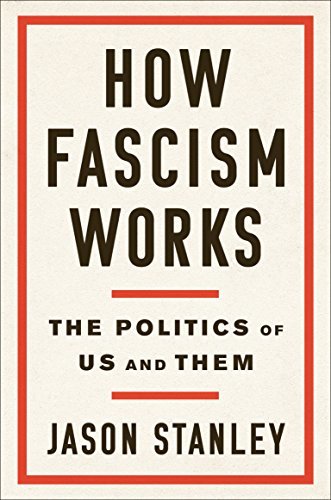
How Fascism Works
258 pages
“No single book is as relevant to the present moment.”—Claudia Rankine, author of Citizen “One of the defining books of the decade.”—Elizabeth Hinton, author of From the War on Poverty to the War on Crime NEW YORK TIMES BOOK REVIEW EDITORS’ CHOICE • With a new preface • Fascist politics are running rampant in America today—and spreading around the world. A Yale philosopher identifies the ten pillars of fascist politics, and charts their horrifying rise and deep history. As the child of refugees of World War II Europe and a renowned philosopher and scholar of propaganda, Jason Stanley has a deep understanding of how democratic societies can be vulnerable to fascism: Nations don’t have to be fascist to suffer from fascist politics. In fact, fascism’s roots have been present in the United States for more than a century. Alarmed by the pervasive rise of fascist tactics both at home and around the globe, Stanley focuses here on the structures that unite them, laying out and analyzing the ten pillars of fascist politics—the language and beliefs that separate people into an “us” and a “them.” He knits together reflections on history, philosophy, sociology, and critical race theory with stories from contemporary Hungary, Poland, India, Myanmar, and the United States, among other nations. He makes clear the immense danger of underestimating the cumulative power of these tactics, which include exploiting a mythic version of a nation’s past; propaganda that twists the language of democratic ideals against themselves; anti-intellectualism directed against universities and experts; law and order politics predicated on the assumption that members of minority groups are criminals; and fierce attacks on labor groups and welfare. These mechanisms all build on one another, creating and reinforcing divisions and shaping a society vulnerable to the appeals of authoritarian leadership. By uncovering disturbing patterns that are as prevalent today as ever, Stanley reveals that the stuff of politics—charged by rhetoric and myth—can quickly become policy and reality. Only by recognizing fascists politics, he argues, may we resist its most harmful effects and return to democratic ideals. “With unsettling insight and disturbing clarity, How Fascism Works is an essential guidebook to our current national dilemma of democracy vs. authoritarianism.”—William Jelani Cobb, author of The Substance of Hope

Oranges
170 pages
Oranges is a fascinating read that reveals the intriguing world of citrus, making you appreciate the fruit in a whole new way.
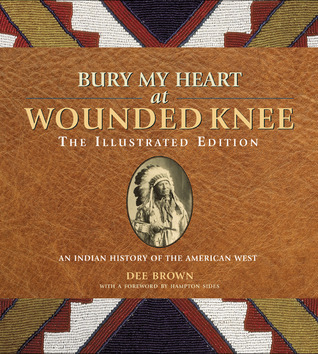
Bury My Heart at Wounded Knee
572 pages
This book profoundly impacted my perspective on history and the struggles of Native Americans.


Seabiscuit
449 pages
This book beautifully captures the incredible story of a racehorse that defied the odds, making it a must-read for anyone who loves an inspiring tale.

SAPIENS - Eine kurze Geschichte der Menschheit
533 pages
Der Millionenseller jetzt aktualisiert und mit neuem Nachwort Vor 100.000 Jahren lebte Homo Sapiens als unbedeutende Spezies in einem abgelegenen Winkel des afrikanischen Kontinents. Heute ist der Mensch Herr und Schrecken des Planeten. Wie konnte es dazu kommen? In seiner fulminanten Reise von den Menschenaffen bis zum Cyborg entwirft Yuval Noah Harari mit seinem international gefeierten Bestseller »Sapiens - Eine kurze Geschichte der Menschheit« das große Panorama unserer eigenen Geschichte – und stellt die Frage, wohin wir von hier aus gehen wollen. »Sapiens« ist einer der größten Sachbucherfolge aller Zeiten und hat allein in Deutschland, bisher unter dem Titel »Eine kurze Geschichte der Menschheit«, über 2 Millionen Exemplare verkauft. Dieser immense Erfolg ist kein Zufall: Das Buch hat von Grund auf verändert, welche Verantwortung wir als Menschen gegenüber unseren Mitgeschöpfen und dem Planeten empfinden – und wie wir handeln. »Yuval Noah Harari schreibt präzise, klug – und vor allem so, dass man gar nicht aufhören will zu lesen. Dieses Buch lässt Hirne wachsen.« ZEIT WISSEN Das Buch erschien erstmals 2013 unter dem Titel »Eine kurze Geschichte der Menschheit« bei DVA. Diese neue Ausgabe ist aktualisiert und um ein neues Nachwort ergänzt. Mit zahlreichen Abbildungen

Homo Deus
565 pages
In seinem Kultbuch Eine kurze Geschichte der Menschheit erklärte Yuval Noah Harari, wie unsere Spezies die Erde erobern konnte. In „Homo Deus“ stößt er vor in eine noch verborgene Welt: die Zukunft. Was wird mit uns und unserem Planeten passieren, wenn die neuen Technologien dem Menschen gottgleiche Fähigkeiten verleihen – schöpferische wie zerstörerische – und das Leben selbst auf eine völlig neue Stufe der Evolution heben? Wie wird es dem Homo Sapiens ergehen, wenn er einen technikverstärkten Homo Deus erschafft, der sich vom heutigen Menschen deutlicher unterscheidet als dieser vom Neandertaler? Was bleibt von uns und der modernen Religion des Humanismus, wenn wir Maschinen konstruieren, die alles besser können als wir? In unserer Gier nach Gesundheit, Glück und Macht könnten wir uns ganz allmählich so weit verändern, bis wir schließlich keine Menschen mehr sind.


Endurance
418 pages
Describes how the ship of polar explorer Ernest Shackleton became immobilized by ice for 10-months on his 1914 expedition to Antarctica, resulting in an 850-mile journey back to civilization with only a skeleton crew remaining. 60,000 first printing.

My Family and Other Animals
322 pages
Gerald Durrell's absolute love of the wild world shines through, and his hilarious portrayal of his family makes this book a delightful read.

Devil in the Grove
472 pages
This book may seem like a small town whodunnit, but it delves into the early story of Thurgood Marshall and the deep-seated Jim Crow racism in central Florida during the first half of the 20th century, making it a compelling read.

Rocket Men
402 pages
This book delves into the Apollo 8 mission, revealing the incredible challenges and lesser-known aspects of humanity's first journey to the Moon, making it a fascinating read for anyone interested in space exploration.

Outliers
174 pages
From the bestselling author of Blink and The Tipping Point, Malcolm Gladwell's Outliers: The Story of Success overturns conventional wisdom about genius to show us what makes an ordinary person an extreme overachiever. Why do some people achieve so much more than others? Can they lie so far out of the ordinary? In this provocative and inspiring book, Malcolm Gladwell looks at everyone from rock stars to professional athletes, software billionaires to scientific geniuses, to show that the story of success is far more surprising, and far more fascinating, than we could ever have imagined. He reveals that it's as much about where we're from and what we do, as who we are - and that no one, not even a genius, ever makes it alone. Outliers will change the way you think about your own life story, and about what makes us all unique. 'Gladwell is not only a brilliant storyteller; he can see what those stories tell us, the lessons they contain' Guardian 'Malcolm Gladwell is a global phenomenon ... he has a genius for making everything he writes seem like an impossible adventure' Observer 'He is the best kind of writer - the kind who makes you feel like you're a genius, rather than he's a genius' The Times

The 9/11 Commission Report: Final Report of the National Commission on Terrorist Attacks Upon the United States (Authorized Edition)
598 pages
The eagerly awaited release of The 9/11 Commission Report has caused an avalanche of press coverage, but nearly all of the media commentary has omitted one important attribute of this instant bestseller: its readability. For once, our government has produced a report designed for the public that it purports to serve. By comparison, the Starr Commission Report was a confusing hodgepodge cobbled together for lawyer clones, and the Warren Commission Report resembled a hastily constructed mountain of data. By contrast, The 9/11 Commission Report is a model of narrative clarity. Reading it, one gains a better sense of every stage and dimension of these truly terrifying events; from the rise of Bin Laden and Al Qaeda to the collapse of the World Trade Center and its aftermath. Like a full-throttled detective story thrust into real life, it renders the near misses and muffed opportunities that enabled the plot to reach fruition. With sensationalizing or overgeneralizing, the report s authors have given us a document that illuminates the planning and possible countermeasures to these terrible acts. Every American should read this book: After all, we are its target audience and its sponsors. R. N. Wilson
The Ghost Map
332 pages
This book dives into the cholera epidemic in London in 1854, showcasing how Dr. John Snow challenged the prevailing miasma theory and fought to prove that water was the true culprit behind the disease. It's a fascinating exploration of how stubborn beliefs can hinder scientific progress.

The Hidden Life of Trees
289 pages
It's absolutely beautiful and offers a fascinating insight into the secret world of trees.


The Art of Logic
338 pages
This book beautifully links how logic and emotions work together, helping readers understand how to engage in better conversations.

The Omnivore's Dilemma
476 pages
"Outstanding . . . a wide-ranging invitation to think through the moral ramifications of our eating habits." —The New Yorker One of the New York Times Book Review's Ten Best Books of the Year and Winner of the James Beard Award Author of This is Your Mind on Plants, How to Change Your Mind and the #1 New York Times Bestseller In Defense of Food and Food Rules What should we have for dinner? Ten years ago, Michael Pollan confronted us with this seemingly simple question and, with The Omnivore’s Dilemma, his brilliant and eye-opening exploration of our food choices, demonstrated that how we answer it today may determine not only our health but our survival as a species. In the years since, Pollan’s revolutionary examination has changed the way Americans think about food. Bringing wide attention to the little-known but vitally important dimensions of food and agriculture in America, Pollan launched a national conversation about what we eat and the profound consequences that even the simplest everyday food choices have on both ourselves and the natural world. Ten years later, The Omnivore’s Dilemma continues to transform the way Americans think about the politics, perils, and pleasures of eating.

Cosmos
390 pages
Renowned astronomer Carl Sagan’s classic bestseller that “dives into the past, present, and future of science, dealing with the mind-staggering enormity of the cosmos in which we exist” (Associated Press)—with an Introduction by Ann Druyan and a Foreword by Neil deGrasse Tyson “Sagan dazzles the mind with the miracle of our survival, framed by the stately galaxies of space.”—Cosmopolitan THE INSPIRATION FOR THE FOX MINISERIES COSMOS: POSSIBLE WORLDS, HOSTED BY NEIL DEGRASSE TYSON AND STARRING SETH MACFARLANE AND SIR PATRICK STEWART In clear-eyed prose, Carl Sagan reveals a jewel-like blue world inhabited by a life form that is just beginning to discover its own identity and to venture into the vast ocean of space. Featuring full-color illustrations, Cosmos retraces the fourteen billion years of cosmic evolution that have transformed matter into consciousness, exploring such topics as the origin of life, the human brain, Egyptian hieroglyphics, spacecraft missions, the death of the Sun, the evolution of galaxies, and the forces and individuals who helped shape modern science.

Unbroken
The book tells the incredible true story of Louis Zamperini, who endured unimaginable hardships as a POW after surviving a plane crash in the Pacific. It's a gripping read that far surpasses the movie adaptation.

A Brief History of Everyone Who Ever Lived
416 pages
This book is an awesome blend of science and storytelling, making it a fascinating read even for those who aren't fans of biology.

The Man Who Mistook His Wife for a Hat
Celebrating Fifty Years of Picador Books If a man has lost a leg or an eye, he knows he has lost a leg or an eye; but if he has lost a self - himself - he cannot know it, because he is no longer there to know it. In this extraordinary book, Dr. Oliver Sacks recounts the stories of patients struggling to adapt to often bizarre worlds of neurological disorder. Here are people who can no longer recognize everyday objects or those they love; who are stricken with violent tics or shout involuntary obscenities, and yet are gifted with unusually acute artistic or mathematical talents. If sometimes beyond our surface comprehension, these brilliant tales illuminate what it means to be human. A provocative exploration of the mysteries of the human mind, The Man Who Mistook His Wife for a Hat is a million-copy bestseller by the twentieth century's greatest neurologist. Part of the Picador Collection, a series showcasing the best of modern literature.

The Devil In The White City
498 pages
This book combines a gripping murder mystery with fascinating engineering feats at the World's Fair, making it a captivating read.

Midnight in the Garden of Good and Evil
402 pages
THE LANDMARK NEW YORK TIMES BESTSELLER • An enormously engaging portrait of a most beguiling Southern city: “Elegant and wicked.... [This] might be the first true-crime book that makes the reader want to book a bed and breakfast for an extended weekend at the scene of the crime." —The New York Times Book Review • 30th Anniversary Edition with a New Afterword by the Author. Shots rang out in Savannah's grandest mansion in the misty,early morning hours of May 2, 1981. Was it murder or self-defense? For nearly a decade, the shooting and its aftermath reverberated throughout this hauntingly beautiful city of moss-hung oaks and shaded squares. John Berendt's sharply observed, suspenseful, and witty narrative reads like a thoroughly engrossing novel, and yet it is a work of nonfiction. Berendt skillfully interweaves a hugely entertaining first-person account of life in this isolated remnant of the Old South with the unpredictable twists and turns of a landmark murder case. It is a spellbinding story peopled by a gallery of remarkable characters: the well-bred society ladies of the Married Woman's Card Club; the turbulent young redneck gigolo; the hapless recluse who owns a bottle of poison so powerful it could kill every man, woman, and child in Savannah; the aging and profane Southern belle who is the "soul of pampered self-absorption"; the uproariously funny black drag queen; the acerbic and arrogant antiques dealer; the sweet-talking, piano-playing con artist; young blacks dancing the minuet at the black debutante ball; and Minerva, the voodoo priestess who works her magic in the graveyard at midnight. These and other Savannahians act as a Greek chorus, with Berendt revealing the alliances, hostilities, and intrigues that thrive in a town where everyone knows everyone else. Midnight in the Garden of Good and Evil is a sublime and seductive reading experience. Brilliantly conceived and masterfully written, this true-crime book has become a modern classic.

Dead Wake
450 pages
This book offers a dramatic account of the Lusitania and its connection to WWI, which keeps you engaged throughout.

In the Garden of Beasts
465 pages
This upcoming read promises to delve into Hitler's rise to power, which is sure to be both intriguing and informative.

Childhood
82 pages
'Utterly, agonisingly compulsive ... a masterpiece' Liz Jensen, Guardian The first volume in The Copenhagen Trilogy, the searing portrait of a woman's journey through love, friendship, ambition and addiction, from one of Denmark's most celebrated twentieth-century writers Tove knows she is a misfit, whose childhood is made for a completely different girl. In her working-class neighbourhood in Copenhagen, she is enthralled by her wild, red-headed friend Ruth, who initiates her into adult secrets. But Tove cannot reveal her true self to her or to anyone else. For 'long, mysterious words begin to crawl across my soul', and she comes to realize that she has a vocation, something unknowable within her - and that she must one day, painfully but inevitably, leave the narrow street of her childhood behind. Childhood, the first volume in The Copenhagen Trilogy, is a visceral portrait of girlhood and female friendship, told with lyricism and vivid intensity.

Moonwalking with Einstein
321 pages
This book dives into the fascinating world of memory athletes and their incredible techniques for memorizing vast amounts of information. It may sound boring at first, but it turned out to be one of my favorites!

A Walk in the Woods
302 pages
It's about hiking, and despite my initial thoughts that it wouldn't be super exciting, the way it's written is incredibly entertaining.

The 272
361 pages
“An absolutely essential addition to the history of the Catholic Church, whose involvement in New World slavery sustained the Church and, thereby, helped to entrench enslavement in American society.”—Annette Gordon-Reed, Pulitzer Prize–winning author of The Hemingses of Monticello and On Juneteenth New York Times Book Review Editors’ Choice • Longlisted for the Andrew Carnegie Medal A BEST BOOK OF THE YEAR: The New Yorker, The New York Times Book Review, The Washington Post, Time, Chicago Public Library, Kirkus Reviews In 1838, a group of America’s most prominent Catholic priests sold 272 enslaved people to save their largest mission project, what is now Georgetown University. In this groundbreaking account, journalist, author, and professor Rachel L. Swarns follows one family through nearly two centuries of indentured servitude and enslavement to uncover the harrowing origin story of the Catholic Church in the United States. Through the saga of the Mahoney family, Swarns illustrates how the Church relied on slave labor and slave sales to sustain its operations and to help finance its expansion. The story begins with Ann Joice, a free Black woman and the matriarch of the Mahoney family. Joice sailed to Maryland in the late 1600s as an indentured servant, but her contract was burned and her freedom stolen. Her descendants, who were enslaved by Jesuit priests, passed down the story of that broken promise for centuries. One of those descendants, Harry Mahoney, saved lives and the church’s money in the War of 1812, but his children, including Louisa and Anna, were put up for sale in 1838. One daughter managed to escape, but the other was sold and shipped to Louisiana. Their descendants would remain apart until Rachel Swarns’s reporting in The New York Times finally reunited them. They would go on to join other GU272 descendants who pressed Georgetown and the Catholic Church to make amends, prodding the institutions to break new ground in the movement for reparations and reconciliation in America. Swarns’s journalism has already started a national conversation about universities with ties to slavery. The 272 tells an even bigger story, not only demonstrating how slavery fueled the growth of the American Catholic Church but also shining a light on the enslaved people whose forced labor helped to build the largest religious denomination in the nation.

The Rise and Fall of the Dinosaurs
416 pages
If you're fascinated by dinosaurs, this book is a must-read! It offers an engaging exploration of their history and extinction.
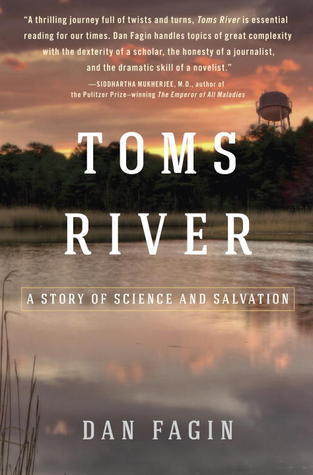
Toms River
562 pages
This book is a masterful blend of science, medicine, and history, making it a compelling read for anyone interested in these fields.

Deep Thinking
288 pages
Human vs computer chess is surprisingly fascinating, and Kasparov's engaging writing style keeps you on the edge of your seat, eager to discover the outcomes.

The Autobiography of Malcolm X
544 pages
ONE OF TIME’S TEN MOST IMPORTANT NONFICTION BOOKS OF THE TWENTIETH CENTURY In the searing pages of this classic autobiography, originally published in 1964, Malcolm X, the Muslim leader, firebrand, and anti-integrationist, tells the extraordinary story of his life and the growth of the Black Muslim movement. His fascinating perspective on the lies and limitations of the American Dream, and the inherent racism in a society that denies its nonwhite citizens the opportunity to dream, gives extraordinary insight into the most urgent issues of our own time. The Autobiography of Malcolm X stands as the definitive statement of a movement and a man whose work was never completed but whose message is timeless. It is essential reading for anyone who wants to understand America. Praise for The Autobiography of Malcolm X “Extraordinary . . . a brilliant, painful, important book.”—The New York Times “This book will have a permanent place in the literature of the Afro-American struggle.”—I. F. Stone

The Death and Life of the Great Lakes
306 pages
This book is amazing and offers a deep dive into the ecological challenges facing the Great Lakes.

Thinking, Fast and Slow
511 pages
This book reveals fascinating insights into our thought processes, highlighting how we often aren't as logical as we believe.

The Crimes of Paris
307 pages
This book offers a fascinating look at the history of crime fighting techniques, including fingerprinting and Bertillionage, all set against the backdrop of the infamous theft of the Mona Lisa.

Longitude
198 pages
This book is a fascinating read that highlights the historical significance of maritime trade.

The Tetris Effect
223 pages
The story of Tetris is super interesting and at times, exciting, making it a compelling read that could easily be adapted into an HBO limited series.

Silent Spring
404 pages
This book powerfully highlights the devastating impact of pesticides on wildlife, evoking a deep sense of sadness and awareness about the loss of biodiversity.

The Boys in the Boat (Movie Tie-In)
433 pages
Even if you're not interested in rowing, this book offers a beautiful and thrilling story that captivates the reader.

The Immortal Life of Henrietta Lacks
386 pages
This book is so captivating that even someone who rarely reads non-fiction found it impossible to put down.

The Map That Changed the World
434 pages
It starts out about digging a canal, which I thought was really interesting!

How to Read Literature Like a Professor 3E
364 pages
Despite its dry title, this book is filled with humor and insights that make it enjoyable to read, even for fun!

In Harm's Way
289 pages
On 30 July 1945 the USS Indianapolis was steaming through the South Pacific, on her way home having delivered the bomb that was to decimate Hiroshima seven days later, when she was torpedoed by a Japanese submarine. Of a crew of 1196 men an estimated 300 were killed upon impact; the remaining 900 sailors went into the sea. Undetected for five days, they struggled to stay alive, fighting off sharks, hypothermia and madness. By the time rescue arrived, only 317 men were left alive. Interweaving the stories of some of these survivors (including the ship's Captain Butler McVay, who would be unjustly court-martialled for the loss of his ship and, twenty years later and tormented by the experience, take his own life), Doug Stanton brings this incredible human drama to life in a narrative that is at once immediate and timeless. The definitive account of a near-forgotten chapter in the history of the last war, In Harm's Way has become a classic. And, some 72 years later, in August 2017, the USS Indianapolis was once again making international headlines - with the news that a marine archaeology team had located the ship's shattered remains: https://www.nytimes.com/2017/08/20/world/asia/uss-indianapolis-paul-allen.html?mcubz=1

The Romanov Sisters
513 pages
A 12-WEEK NEW YORK TIMES BESTSELLER "Helen Rappaport paints a compelling portrait of the doomed grand duchesses." —People magazine "The public spoke of the sisters in a gentile, superficial manner, but Rappaport captures sections of letters and diary entries to showcase the sisters' thoughtfulness and intelligence." —Publishers Weekly (starred review) From the New York Times bestselling author of The Last Days of the Romanovs and Caught in the Revolution, The Romanov Sisters reveals the untold stories of the four daughters of Nicholas and Alexandra. They were the Princess Dianas of their day—perhaps the most photographed and talked about young royals of the early twentieth century. The four captivating Russian Grand Duchesses—Olga, Tatiana, Maria and Anastasia Romanov—were much admired for their happy dispositions, their looks, the clothes they wore and their privileged lifestyle. Over the years, the story of the four Romanov sisters and their tragic end in a basement at Ekaterinburg in 1918 has clouded our view of them, leading to a mass of sentimental and idealized hagiography. With this treasure trove of diaries and letters from the grand duchesses to their friends and family, we learn that they were intelligent, sensitive and perceptive witnesses to the dark turmoil within their immediate family and the ominous approach of the Russian Revolution, the nightmare that would sweep their world away, and them along with it. The Romanov Sisters sets out to capture the joy as well as the insecurities and poignancy of those young lives against the backdrop of the dying days of late Imperial Russia, World War I and the Russian Revolution. Helen Rappaport aims to present a new and challenging take on the story, drawing extensively on previously unseen or unpublished letters, diaries and archival sources, as well as private collections. It is a book that will surprise people, even aficionados.

The Splendid and the Vile
609 pages
This book is a gripping account that keeps you on the edge of your seat, making it impossible to put down.

The Lost King of France
326 pages
This book is so captivating that I read it in one sitting, showcasing its engaging narrative.

Last Chance to See
257 pages
New York Times bestselling author Douglas Adams and zoologist Mark Carwardine take off around the world in search of exotic, endangered creatures. Join them as they encounter the animal kingdom in its stunning beauty, astonishing variety, and imminent peril: the giant Komodo dragon of Indonesia, the helpless but loveable Kakapo of New Zealand, the blind river dolphins of China, the white rhinos of Zaire, the rare birds of Mauritius island in the Indian Ocean. Hilarious and poignant—as only Douglas Adams can be—Last Chance to See is an entertaining and arresting odyssey through the Earth’s magnificent wildlife galaxy. Praise for Last Chance to See “Lively, sharply satirical, brilliantly written . . . shows how human care can undo what human carelessness has wrought.”—The Atlantic “These authors don’t hesitate to present the alarming facts: More than 1,000 species of animals (and plants) become extinct every year. . . . Perhaps Adams and Carwardine, with their witty science, will help prevent such misadventures in the future.”—Boston Sunday Herald “Very funny and moving . . . The glimpses of rare fauna seem to have enlarged [Adams’s] thinking, enlivened his world; and so might the animals do for us all, if we were to help them live.”—The Washington Post Book World “[Adams] invites us to enter into a conspiracy of laughter and caring.”—Los Angeles Times “Amusing . . . thought-provoking . . . Its details on the heroic efforts being made to save these animals are inspirational.”—The New York Times Book Review