Dive into History: Must-Read Books for Beginners
Embark on a journey through time with these captivating historical books that will ignite your passion for learning. Each selection offers a unique perspective on humanity's past, making it easy to get lost in the stories that shaped our world. Perfect for those ready to expand their horizons and embrace the richness of history!

A Short History of Nearly Everything
562 pages
Bill Bryson's writing offers shallow dives into Western history, making it perfect for those with a short attention span.

One Summer
562 pages
Bill Bryson's writing offers shallow dives into Western history, making it perfect for those with a short attention span.

At Home
645 pages
Bill Bryson's writing offers shallow dives into Western history, making it perfect for those with a short attention span.

King Leopold's Ghost
519 pages
This book is a must-read for its unflinching condemnation of Belgian colonization in the Congo, showcasing the brutal realities of that era.

Salt
490 pages
This book offers a fascinating perspective on world history by exploring it through the lens of salt, revealing how this simple seasoning has shaped economies, cultures, and societies.

The Storm Before the Storm
252 pages
Mike Duncan’s History of Rome is a fantastic read for anyone interested in a well-crafted narrative that brings the ancient world to life.

SPQR: A History of Ancient Rome
743 pages
This book offers insightful connections between ancient Rome and our modern world, making it a must-read for anyone interested in history.

Sapiens
403 pages
New York Times Readers’ Pick: Top 100 Books of the 21st Century New York Times Bestseller A Summer Reading Pick for President Barack Obama, Bill Gates, and Mark Zuckerberg From a renowned historian comes a groundbreaking narrative of humanity’s creation and evolution—a #1 international bestseller—that explores the ways in which biology and history have defined us and enhanced our understanding of what it means to be “human.” One hundred thousand years ago, at least six different species of humans inhabited Earth. Yet today there is only one—homo sapiens. What happened to the others? And what may happen to us? Most books about the history of humanity pursue either a historical or a biological approach, but Dr. Yuval Noah Harari breaks the mold with this highly original book that begins about 70,000 years ago with the appearance of modern cognition. From examining the role evolving humans have played in the global ecosystem to charting the rise of empires, Sapiens integrates history and science to reconsider accepted narratives, connect past developments with contemporary concerns, and examine specific events within the context of larger ideas. Dr. Harari also compels us to look ahead, because over the last few decades humans have begun to bend laws of natural selection that have governed life for the past four billion years. We are acquiring the ability to design not only the world around us, but also ourselves. Where is this leading us, and what do we want to become? Featuring 27 photographs, 6 maps, and 25 illustrations/diagrams, this provocative and insightful work is sure to spark debate and is essential reading for aficionados of Jared Diamond, James Gleick, Matt Ridley, Robert Wright, and Sharon Moalem.

Seventeen Seventy-six
560 pages
"As the crucial weeks pass, defeat follows defeat, and in the long retreat across New Jersey, all hope seems gone, until Washington launches the "brilliant stroke" that will change history."--BOOK JACKET.

Midnight in Chernobyl
560 pages
A New York Times Best Book of the Year A Time Best Book of the Year A Kirkus Reviews Best Nonfiction Book of the Year 2020 Andrew Carnegie Medals for Excellence Winner One of NPR’s Best Books of 2019 Journalist Adam Higginbotham’s definitive, years-in-the-making account of the Chernobyl nuclear power plant disaster—and a powerful investigation into how propaganda, secrecy, and myth have obscured the true story of one of the twentieth century’s greatest disasters. Early in the morning of April 26, 1986, Reactor Number Four of the Chernobyl Atomic Energy Station exploded, triggering history’s worst nuclear disaster. In the thirty years since then, Chernobyl has become lodged in the collective nightmares of the world: shorthand for the spectral horrors of radiation poisoning, for a dangerous technology slipping its leash, for ecological fragility, and for what can happen when a dishonest and careless state endangers its citizens and the entire world. But the real story of the accident, clouded from the beginning by secrecy, propaganda, and misinformation, has long remained in dispute. Drawing on hundreds of hours of interviews conducted over the course of more than ten years, as well as letters, unpublished memoirs, and documents from recently-declassified archives, Adam Higginbotham has written a harrowing and compelling narrative which brings the disaster to life through the eyes of the men and women who witnessed it firsthand. The result is a masterful nonfiction thriller, and the definitive account of an event that changed history: a story that is more complex, more human, and more terrifying than the Soviet myth. Midnight in Chernobyl is an indelible portrait of one of the great disasters of the twentieth century, of human resilience and ingenuity, and the lessons learned when mankind seeks to bend the natural world to his will—lessons which, in the face of climate change and other threats, remain not just vital but necessary.

The Guns of August
658 pages
PULITZER PRIZE WINNER • “A brilliant piece of military history which proves up to the hilt the force of Winston Churchill’s statement that the first month of World War I was ‘a drama never surpassed.’”—Newsweek Selected by the Modern Library as one of the 100 best nonfiction books of all time In this landmark account, renowned historian Barbara W. Tuchman re-creates the first month of World War I: thirty days in the summer of 1914 that determined the course of the conflict, the century, and ultimately our present world. Beginning with the funeral of Edward VII, Tuchman traces each step that led to the inevitable clash. And inevitable it was, with all sides plotting their war for a generation. Dizzyingly comprehensive and spectacularly portrayed with her famous talent for evoking the characters of the war’s key players, Tuchman’s magnum opus is a classic for the ages. The Proud Tower, the Pulitzer Prize–winning The Guns of August, and The Zimmermann Telegram comprise Barbara W. Tuchman’s classic histories of the First World War era

1491
541 pages
This book is mind-expanding and changes your view of the Americas before the Europeans arrived.

The Devil In The White City
498 pages
This book offers a thrilling glimpse into life at the turn of the 19th/20th century, intertwining the story of one of America's first serial killers with historical events. It's a fast-paced read that feels like fiction, making it a must-read, especially for those with a connection to Chicago.

Dead Wake
450 pages
Larson's mastery in historical non-fiction shines through in this book, making it another great recommendation for readers.

Sapiens
354 pages
'Interesting and provocative... It gives you a sense of how briefly we've been on this Earth' Barack Obama What makes us brilliant? What makes us deadly? What makes us Sapiens? One of the world's preeminent historians and thinkers, Yuval Noah Harari challenges everything we know about being human. Earth is 4.5 billion years old. In just a fraction of that time, one species among countless others has conquered it: us. In this bold and provocative book, Yuval Noah Harari explores who we are, how we got here and where we're going. **ONE OF THE GUARDIAN'S 100 BEST BOOKS OF THE 21st CENTURY** PRAISE FOR SAPIENS: 'Jaw-dropping from the first word to the last... It may be the best book I've ever read' Chris Evans 'Startling... It changes the way you look at the world' Simon Mayo 'I would recommend Sapiens to anyone who's interested in the history and future of our species' Bill Gates Over 2 million copies sold since publication [Nielsen BookScan UK, Circana BookScan US, April 2024]
Bury My Heart at Wounded Knee
572 pages
Documents, personal narratives, and illustrations record the experiences of Native Americans during the nineteenth century.

Rise And Fall Of The Third Reich
1268 pages
The classic history of Adolph Hitler's rise to power and his dramatic defeat.

Mythos
354 pages
Mythos is a captivating exploration of Greek mythology, offering a comprehensive look at the myths that have shaped our understanding of ancient Greece.

Troy
247 pages
Troy is an engaging read that brings the epic tales of the Trojan War to life, perfect for those fascinated by ancient Greek stories.

A People's History of the United States
675 pages
THE CLASSIC NATIONAL BESTSELLER "A wonderful, splendid book—a book that should be read by every American, student or otherwise, who wants to understand his country, its true history, and its hope for the future." –Howard Fast Historian Howard Zinn’s A People’s History of the United States chronicles American history from the bottom up, throwing out the official narrative taught in schools—with its emphasis on great men in high places—to focus on the street, the home, and the workplace. Known for its lively, clear prose as well as its scholarly research, it is the only volume to tell America's story from the point of view of—and in the words of—America's women, factory workers, African-Americans, Native Americans, the working poor, and immigrant laborers. As Zinn shows, many of our country's greatest battles—the fights for a fair wage, an eight-hour workday, child-labor laws, health and safety standards, universal suffrage, women's rights, racial equality—were carried out at the grassroots level, against bloody resistance. Covering Christopher Columbus's arrival through President Clinton's first term, A People's History of the United States features insightful analysis of the most important events in our history. This edition also includes an introduction by Anthony Arnove, who wrote, directed, and produced The People Speak with Zinn and who coauthored, with Zinn, Voices of a People’s History of the United States.

Homage to Catalonia
247 pages
Orwell's firsthand account of the Spanish Civil War offers a unique perspective, blending personal bias with a deep understanding of the conflict's complexities.

Nothing To Envy
388 pages
Demick's poignant narrative offers a rare glimpse into the lives of North Koreans during a time of crisis, revealing the human cost of political turmoil.

Shackleton's Forgotten Expedition
402 pages
Riffenburgh uncovers the lesser-known challenges of Shackleton's *Nimrod* expedition, shedding light on the remarkable feats of Antarctic exploration.
Rome
432 pages
Kneale's exploration of Rome's sackings provides a fascinating look at the political and social dynamics of each event, revealing their lasting impact on history.

1215: The Year of Magna Carta
233 pages
This concise work sheds light on life in 13th Century England, challenging misconceptions about the Medieval period and revealing the daily lives of its people.

Heroes
334 pages
Heroes delves into the tales of well-known Greek heroes, making it a must-read for anyone interested in the legendary figures of mythology.

By The Bridge
280 pages
The 'My Story' series presents historical events in a diary format, allowing readers to experience different eras through relatable characters.

Anti-Semite and Jew
177 pages
Sartre's exploration of the phenomenology of hate provides a profound understanding of how prejudice can lead to tyranny, making it a thought-provoking read.

India
1074 pages
Keay's book provides a dense yet insightful look into India's complicated history, serving as an excellent introduction to a region often overlooked in Western narratives.

Genghis Khan and the Making of the Modern World
354 pages
Weatherford's book challenges the barbaric stereotypes of the Mongols, revealing a complex empire characterized by law, reason, and unexpected prosperity.

Who Murdered Chaucer?
424 pages
Jones explores the life of Geoffrey Chaucer and the intriguing possibility of his murder, blending historical scholarship with engaging storytelling.

Tibet
350 pages
This book offers a comprehensive and balanced approach to Tibetan history, making it a great starting point for anyone wanting to learn more about Tibet.

They Thought They Were Free
391 pages
Meyer’s essential reading illustrates how a small town fell prey to Nazi ideology, serving as a cautionary tale about the dangers of propaganda and totalitarianism.

Poland
43 pages
Zamoyski's straightforward narrative uncovers the rich and tumultuous history of Poland, offering insights into its medieval past and modern struggles.

Underground
385 pages
This nonfiction work offers deep insights into the 1995 sarin gas attacks in Japan, featuring interviews with victims and ex-cult members, revealing the complexities of the Japanese psyche.

Eslanda
269 pages
Eslanda "Essie" Cardozo Goode Robeson lived a colorful and amazing life. Her career and commitments took her many places: colonial Africa in 1936, the front lines of the Spanish Civil War, the founding meeting of the United Nations, Nazi-occupied Berlin, Stalin's Russia, and China two months after Mao's revolution. She was a woman of unusual accomplishment—an anthropologist, a prolific journalist, a tireless advocate of women's rights, an outspoken anti-colonial and antiracist activist, and an internationally sought-after speaker. Yet historians for the most part have confined Essie to the role of Mrs. Paul Robeson, a wife hidden in the large shadow cast by her famous husband. In this masterful book, biographer Barbara Ransby refocuses attention on Essie, one of the most important and fascinating black women of the twentieth century. Chronicling Essie's eventful life, the book explores her influence on her husband's early career and how she later achieved her own unique political voice. Essie's friendships with a host of literary icons and world leaders, her renown as a fierce defender of justice, her defiant testimony before Senator Joseph McCarthy's infamous anti-communist committee, and her unconventional open marriage that endured for over 40 years—all are brought to light in the pages of this inspiring biography. Essie's indomitable personality shines through, as do her contributions to United States and twentieth-century world history.

I Will Never See the World Again
225 pages
Best Book of the Year – Bloomberg News A resilient Turkish writer’s inspiring account of his imprisonment that provides crucial insight into political censorship amidst the global rise of authoritarianism. The destiny I put down in my novel has become mine. I am now under arrest like the hero I created years ago. I await the decision that will determine my future, just as he awaited his. I am unaware of my destiny, which has perhaps already been decided, just as he was unaware of his. I suffer the pathetic torment of profound helplessness, just as he did. Like a cursed oracle, I foresaw my future years ago not knowing that it was my own. Confined in a cell four meters long, imprisoned on absurd, Kafkaesque charges, novelist Ahmet Altan is one of many writers persecuted by Recep Tayyip Erdoğan’s oppressive regime. In this extraordinary memoir, written from his prison cell, Altan reflects upon his sentence, on a life whittled down to a courtyard covered by bars, and on the hope and solace a writer’s mind can provide, even in the darkest places.

Voices of a People's History of the United States
667 pages
A classic that provides an alternative perspective on American history, making it a significant read.

Say Nothing
561 pages
A gripping exploration of the Troubles in Northern Ireland that leaves you utterly engrossed and ultimately devastated.
Nagasaki
289 pages
A personal favorite that delves into the bombing of Nagasaki and its aftermath, offering a profound perspective on the event.

The Grapes of Wrath
530 pages
This book beautifully captures a pivotal moment in American history, making it a must-read for anyone interested in the past.

America's Women
602 pages
It's an easy, breezy cruise through American history, making it a perfect pick for when you're between books.

The Texas Rangers
509 pages
While I enjoy Mike Duncan's podcasts more than his books, they still provide valuable insights into historical events.

1493
722 pages
NATIONAL BESTSELLER • A deeply engaging history of how European settlements in the post-Colombian Americas shaped the world—from the highly acclaimed author of 1491. • "Fascinating...Lively...A convincing explanation of why our world is the way it is." —The New York Times Book Review Presenting the latest research by biologists, anthropologists, archaeologists, and historians, Mann shows how the post-Columbian network of ecological and economic exchange fostered the rise of Europe, devastated imperial China, convulsed Africa, and for two centuries made Mexico City—where Asia, Europe, and the new frontier of the Americas dynamically interacted—the center of the world. In this history, Mann uncovers the germ of today's fiercest political disputes, from immigration to trade policy to culture wars. In 1493, Mann has again given readers an eye-opening scientific interpretation of our past, unequaled in its authority and fascination.

Liberty or Death
420 pages
This book offers an excellent exploration of the French Revolution, making it a must-read for anyone interested in this pivotal era of history.

The Battle for Spain
445 pages
Antony Beevor's history of the Spanish Civil War is a captivating read that delves deep into a pivotal moment in history.

Shirley Jackson: A Rather Haunted Life
368 pages
SPQR is an AWESOME Roman history book that offers fascinating insights into ancient Rome.

Grant
1122 pages
The #1 New York Times bestseller and New York Times Book Review 10 Best Books of 2017 “Eminently readable but thick with import . . . Grant hits like a Mack truck of knowledge.” —Ta-Nehisi Coates, The Atlantic Pulitzer Prize winner Ron Chernow returns with a sweeping and dramatic portrait of one of our most compelling generals and presidents, Ulysses S. Grant. Ulysses S. Grant's life has typically been misunderstood. All too often he is caricatured as a chronic loser and an inept businessman, or as the triumphant but brutal Union general of the Civil War. But these stereotypes don't come close to capturing him, as Chernow shows in his masterful biography, the first to provide a complete understanding of the general and president whose fortunes rose and fell with dizzying speed and frequency. Before the Civil War, Grant was flailing. His business ventures had ended dismally, and despite distinguished service in the Mexican War he ended up resigning from the army in disgrace amid recurring accusations of drunkenness. But in war, Grant began to realize his remarkable potential, soaring through the ranks of the Union army, prevailing at the battle of Shiloh and in the Vicksburg campaign, and ultimately defeating the legendary Confederate general Robert E. Lee. Along the way, Grant endeared himself to President Lincoln and became his most trusted general and the strategic genius of the war effort. Grant’s military fame translated into a two-term presidency, but one plagued by corruption scandals involving his closest staff members. More important, he sought freedom and justice for black Americans, working to crush the Ku Klux Klan and earning the admiration of Frederick Douglass, who called him “the vigilant, firm, impartial, and wise protector of my race.” After his presidency, he was again brought low by a dashing young swindler on Wall Street, only to resuscitate his image by working with Mark Twain to publish his memoirs, which are recognized as a masterpiece of the genre. With lucidity, breadth, and meticulousness, Chernow finds the threads that bind these disparate stories together, shedding new light on the man whom Walt Whitman described as “nothing heroic... and yet the greatest hero.” Chernow’s probing portrait of Grant's lifelong struggle with alcoholism transforms our understanding of the man at the deepest level. This is America's greatest biographer, bringing movingly to life one of our finest but most underappreciated presidents. The definitive biography, Grant is a grand synthesis of painstaking research and literary brilliance that makes sense of all sides of Grant's life, explaining how this simple Midwesterner could at once be so ordinary and so extraordinary. Named one of the best books of the year by Goodreads • Amazon • The New York Times • Newsday • BookPage • Barnes and Noble • Wall Street Journal

Washington
961 pages
From the author of Alexander Hamilton, the New York Times bestselling biography that inspired the musical, comes a gripping portrait of the first president of the United States. Winner of the 2011 Pulitzer Prize for Biography “Truly magnificent . . . [a] well-researched, well-written and absolutely definitive biography” —Andrew Roberts, The Wall Street Journal “Until recently, I’d never believed that there could be such a thing as a truly gripping biography of George Washington . . . Well, I was wrong. I can’t recommend it highly enough—as history, as epic, and, not least, as entertainment.” —Hendrik Hertzberg, The New Yorker Celebrated biographer Ron Chernow provides a richly nuanced portrait of the father of our nation and the first president of the United States. With a breadth and depth matched by no other one volume biography of George Washington, this crisply paced narrative carries the reader through his adventurous early years, his heroic exploits with the Continental Army during the Revolutionary War, his presiding over the Constitutional Convention, and his magnificent performance as America's first president. In this groundbreaking work, based on massive research, Chernow shatters forever the stereotype of George Washington as a stolid, unemotional figure and brings to vivid life a dashing, passionate man of fiery opinions and many moods. Lin-Manuel Miranda’s smash Broadway musical Hamilton has sparked new interest in the Revolutionary War and the Founding Fathers. In addition to Alexander Hamilton, the production also features George Washington, Thomas Jefferson, James Madison, Aaron Burr, Lafayette, and many more.

Alexander Hamilton
834 pages
The #1 New York Times bestseller, and the inspiration for the hit Broadway musical Hamilton! Pulitzer Prize-winning author Ron Chernow presents a landmark biography of Alexander Hamilton, the Founding Father who galvanized, inspired, scandalized, and shaped the newborn nation. "Grand-scale biography at its best—thorough, insightful, consistently fair, and superbly written . . . A genuinely great book." —David McCullough “A robust full-length portrait, in my view the best ever written, of the most brilliant, charismatic and dangerous founder of them all." —Joseph Ellis Few figures in American history have been more hotly debated or more grossly misunderstood than Alexander Hamilton. Chernow’s biography gives Hamilton his due and sets the record straight, deftly illustrating that the political and economic greatness of today’s America is the result of Hamilton’s countless sacrifices to champion ideas that were often wildly disputed during his time. “To repudiate his legacy,” Chernow writes, “is, in many ways, to repudiate the modern world.” Chernow here recounts Hamilton’s turbulent life: an illegitimate, largely self-taught orphan from the Caribbean, he came out of nowhere to take America by storm, rising to become George Washington’s aide-de-camp in the Continental Army, coauthoring The Federalist Papers, founding the Bank of New York, leading the Federalist Party, and becoming the first Treasury Secretary of the United States.Historians have long told the story of America’s birth as the triumph of Jefferson’s democratic ideals over the aristocratic intentions of Hamilton. Chernow presents an entirely different man, whose legendary ambitions were motivated not merely by self-interest but by passionate patriotism and a stubborn will to build the foundations of American prosperity and power. His is a Hamilton far more human than we’ve encountered before—from his shame about his birth to his fiery aspirations, from his intimate relationships with childhood friends to his titanic feuds with Jefferson, Madison, Adams, Monroe, and Burr, and from his highly public affair with Maria Reynolds to his loving marriage to his loyal wife Eliza. And never before has there been a more vivid account of Hamilton’s famous and mysterious death in a duel with Aaron Burr in July of 1804. Chernow’s biography is not just a portrait of Hamilton, but the story of America’s birth seen through its most central figure. At a critical time to look back to our roots, Alexander Hamilton will remind readers of the purpose of our institutions and our heritage as Americans. 9780143034759

Ernst Jünger and Germany
312 pages
The Third Reich is a great choice for anyone interested in World War II history.

Titan
834 pages
National Book Critics Circle Award Finalist From the acclaimed, award-winning author of Alexander Hamilton: here is the essential, endlessly engrossing biography of John D. Rockefeller, Sr.—the Jekyll-and-Hyde of American capitalism. In the course of his nearly 98 years, Rockefeller was known as both a rapacious robber baron, whose Standard Oil Company rode roughshod over an industry, and a philanthropist who donated money lavishly to universities and medical centers. He was the terror of his competitors, the bogeyman of reformers, the delight of caricaturists—and an utter enigma. Drawing on unprecedented access to Rockefeller’s private papers, Chernow reconstructs his subjects’ troubled origins (his father was a swindler and a bigamist) and his single-minded pursuit of wealth. But he also uncovers the profound religiosity that drove him “to give all I could”; his devotion to his father; and the wry sense of humor that made him the country’s most colorful codger. Titan is a magnificent biography—balanced, revelatory, elegantly written.

Lies My Teacher Told Me
464 pages
Criticizes the way history is presented in current textbooks, and suggests a fresh and more accurate approach to teaching American history.

SAPIENS - Eine kurze Geschichte der Menschheit
533 pages
Der Millionenseller jetzt aktualisiert und mit neuem Nachwort Vor 100.000 Jahren lebte Homo Sapiens als unbedeutende Spezies in einem abgelegenen Winkel des afrikanischen Kontinents. Heute ist der Mensch Herr und Schrecken des Planeten. Wie konnte es dazu kommen? In seiner fulminanten Reise von den Menschenaffen bis zum Cyborg entwirft Yuval Noah Harari mit seinem international gefeierten Bestseller »Sapiens - Eine kurze Geschichte der Menschheit« das große Panorama unserer eigenen Geschichte – und stellt die Frage, wohin wir von hier aus gehen wollen. »Sapiens« ist einer der größten Sachbucherfolge aller Zeiten und hat allein in Deutschland, bisher unter dem Titel »Eine kurze Geschichte der Menschheit«, über 2 Millionen Exemplare verkauft. Dieser immense Erfolg ist kein Zufall: Das Buch hat von Grund auf verändert, welche Verantwortung wir als Menschen gegenüber unseren Mitgeschöpfen und dem Planeten empfinden – und wie wir handeln. »Yuval Noah Harari schreibt präzise, klug – und vor allem so, dass man gar nicht aufhören will zu lesen. Dieses Buch lässt Hirne wachsen.« ZEIT WISSEN Das Buch erschien erstmals 2013 unter dem Titel »Eine kurze Geschichte der Menschheit« bei DVA. Diese neue Ausgabe ist aktualisiert und um ein neues Nachwort ergänzt. Mit zahlreichen Abbildungen

The Rise And Fall Of Apartheid
528 pages
On his way into Parliament on 2 February 1990 FW de Klerk turned to his wife Marike and said, referring to his forthcoming speech: 'South Africa will never be the same again after this.' Did white South Africa crack, or did its leadership yield sufficiently and just in time to avert a revolution? The transformation has been called a miracle, belying gloomy predictions of race war in which the white minority went into a laager and fought to the last drop of blood. Why did it happen? Professor Welsh views the topic against the backdrop of a long history of conflict spanning apartheid's rise and demise, and the liberation movement's suppression and subsequent resurrection. His view is that the movement away from apartheid to majority rule would have taken far longer and been much bloodier were it not for the changes undergone by Afrikaner nationalism itself. There were turning points, such as the Soweto uprising of 1976, but few believed that the transition from white domination to inclusive democracy would occur as soon - and as relatively peacefully - as it did. In effect, however, a multitude of different factors led the ANC and the National Party to see that neither side could win the conflict on its own terms. Utterly dissimilar in background, culture, beliefs and political style, Nelson Mandela and FW de Klerk were an unlikely pair of liberators. But both soon recognised that they were dependent on each other to steer the transformation process through to its conclusion.

Leonardo Da Vinci
588 pages
'To read this magnificent biography of Leonardo da Vinci is to take a tour through the life and works of one of the most extraordinary human beings of all time in the company of the most engaging, informed, and insightful guide imaginable. Walter Isaacson is at once a true scholar and a spellbinding writer. And what a wealth of lessons there are to be learned in these pages.' David McCullough Based on thousands of pages from Leonardo’s astonishing notebooks and new discoveries about his life and work, Walter Isaacson weaves a narrative that connects his art to his science. He shows how Leonardo’s genius was based on skills we can improve in ourselves, such as passionate curiosity, careful observation, and an imagination so playful that it flirted with fantasy. He produced the two most famous paintings in history, The Last Supper and the Mona Lisa. But in his own mind, he was just as much a man of science and technology. With a passion that sometimes became obsessive, he pursued innovative studies of anatomy, fossils, birds, the heart, flying machines, botany, geology, and weaponry. His ability to stand at the crossroads of the humanities and the sciences, made iconic by his drawing of Vitruvian Man, made him history’s most creative genius. His creativity, like that of other great innovators, came from having wide-ranging passions. He peeled flesh off the faces of cadavers, drew the muscles that move the lips, and then painted history’s most memorable smile. He explored the math of optics, showed how light rays strike the cornea, and produced illusions of changing perspectives in The Last Supper. Isaacson also describes how Leonardo’s lifelong enthusiasm for staging theatrical productions informed his paintings and inventions. Leonardo’s delight at combining diverse passions remains the ultimate recipe for creativity. So, too, does his ease at being a bit of a misfit: illegitimate, gay, vegetarian, left-handed, easily distracted, and at times heretical. His life should remind us of the importance of instilling, both in ourselves and our children, not just received knowledge but a willingness to question it—to be imaginative and, like talented misfits and rebels in any era, to think different.

Why Evolution Is True
312 pages
"Coyne's knowledge of evolutionary biology is prodigious, his deployment of it as masterful as his touch is light." -Richard Dawkins In the current debate about creationism and intelligent design, there is an element of the controversy that is rarely mentioned-the evidence. Yet the proof of evolution by natural selection is vast, varied, and magnificent. In this succinct and accessible summary of the facts supporting the theory of natural selection, Jerry A. Coyne dispels common misunderstandings and fears about evolution and clearly confirms the scientific truth that supports this amazing process of change. Weaving together the many threads of modern work in genetics, paleontology, geology, molecular biology, and anatomy that demonstrate the "indelible stamp" of the processes first proposed by Darwin, Why Evolution Is True does not aim to prove creationism wrong. Rather, by using irrefutable evidence, it sets out to prove evolution right.

John Adams
18 pages
Profiles John Adams, an influential patriot during the American Revolution who became the nation's first vice president and second president.

Trafalgar
332 pages
This is the true story of the Battle of Trafalgar, Britain's most significant sea battle, as seen through the smoke-hazed gunports of the fighting ships. In an atmosphere of choking fumes from cannon and musket fire, amid noise so intense it was almost tangible, the crews of the British, French and Spanish ships did their best to carry out their allotted tasks. For over five hours they were in constant danger from a terrifying array of iron and lead missiles fired from enemy guns, as well as the deadly wooden splinters smashed from the ships' hulls by the cannon-balls. While the men manoeuvred the ships and kept the cannons firing, the women helped the surgeons tend the sick or helped the boys - the 'powder monkeys' - in the hazardous job of carrying gunpowder cartridges from the central magazine to the gun decks. Trafalgar set the seal on British naval supremacy, which became the mainspring for the growth of the British Empire, and in the short term not only prevented Napoleon from invading Britain, but also enabled Britain and its Continental allies to mount the campaign that would eventually defeat the French Emperor: without Trafalgar there would be no Waterloo.

Hitler
175 pages
Adolf Hitler has left a lasting mark on the twentieth-century, as the dictator of Germany and instigator of a genocidal war, culminating in the ruin of much of Europe and the globe. This innovative best-seller explores the nature and mechanics of Hitler's power, and how he used it.

Socrates
120 pages
A brilliant portrait of the Greek philosopher who personified philosophy. Socrates was undeniably one of the greatest thinkers of all time, yet he wrote nothing. Throughout his life, and indeed until his very last moment alive, Socrates fully embodied his philosophy in thought and deed. It is through the story of his life that we can fully grasp his powerful actions and ideas. In his highly acclaimed style, historian Paul Johnson masterfully disentangles centuries of scarce sources to offer a riveting account of a homely but charismatic middle-class man living in Athens in the fifth century b.c., and how what this man thought still shapes the way we decide how to act, and how we fathom the notion of body and soul. Johnson provides a compelling picture of the city and people Socrates reciprocally delighted in, as well as many enlightening and intimate analyses of specific aspects of his personality. Enchantingly portraying "the sheer power of Socrates's mind, and its unique combination of steel, subtlety, and frivolity," Paul Johnson captures the vast and intriguing life of a man who did nothing less than supply the basic apparatus of the human mind.

To Hell and Back
635 pages
"Chilling... To Hell and Back should be required reading in every chancellery, every editorial cockpit and every place where peevish Euroskeptics do their thinking…. Kershaw documents each and every ‘ism’ of his analysis with extraordinary detail and passionate humanism."—The New York Times Book Review The Penguin History of Europe series reaches the twentieth century with acclaimed scholar Ian Kershaw’s long-anticipated analysis of the pivotal years of World War I and World War II. The European catastrophe, the long continuous period from 1914 to 1949, was unprecedented in human history—an extraordinarily dramatic, often traumatic, and endlessly fascinating period of upheaval and transformation. This new volume in the Penguin History of Europe series offers comprehensive coverage of this tumultuous era. Beginning with the outbreak of World War I through the rise of Hitler and the aftermath of the Second World War, award-winning British historian Ian Kershaw combines his characteristic original scholarship and gripping prose as he profiles the key decision makers and the violent shocks of war as they affected the entire European continent and radically altered the course of European history. Kershaw identifies four major causes for this catastrophe: an explosion of ethnic-racist nationalism, bitter and irreconcilable demands for territorial revisionism, acute class conflict given concrete focus through the Bolshevik Revolution, and a protracted crisis of capitalism. Incisive, brilliantly written, and filled with penetrating insights, To Hell and Back offers an indispensable study of a period in European history whose effects are still being felt today.


The Rise and Fall of Ancient Egypt
790 pages
NEW YORK TIMES BESTSELLER • “Magisterial . . . [A] rich portrait of ancient Egypt’s complex evolution over the course of three millenniums.”—Los Angeles Times NAMED ONE OF THE BEST BOOKS OF THE YEAR BY The Washington Post • Publishers Weekly In this landmark volume, one of the world’s most renowned Egyptologists tells the epic story of this great civilization, from its birth as the first nation-state to its absorption into the Roman Empire. Drawing upon forty years of archaeological research, award-winning scholar Toby Wilkinson takes us inside a tribal society with a pre-monetary economy and decadent, divine kings who ruled with all-too-recognizable human emotions. Here are the legendary leaders: Akhenaten, the “heretic king,” who with his wife Nefertiti brought about a revolution with a bold new religion; Tutankhamun, whose dazzling tomb would remain hidden for three millennia; and eleven pharaohs called Ramesses, the last of whom presided over the militarism, lawlessness, and corruption that caused a political and societal decline. Filled with new information and unique interpretations, The Rise and Fall of Ancient Egypt is a riveting and revelatory work of wild drama, bold spectacle, unforgettable characters, and sweeping history. “With a literary flair and a sense for a story well told, Mr. Wilkinson offers a highly readable, factually up-to-date account.”—The Wall Street Journal “[Wilkinson] writes with considerable verve. . . . [He] is nimble at conveying the sumptuous pageantry and cultural sophistication of pharaonic Egypt.”—The New York Times

Guns, Germs, and Steel: The Fates of Human Societies (20th Anniversary Edition)
728 pages
Winner of the Pulitzer Prize • New York Times Bestseller • Over Two Million Copies Sold “One of the most significant projects embarked upon by any intellectual of our generation” (Gregg Easterbrook, New York Times), Guns, Germs, and Steel presents a groundbreaking, unified narrative of human history. Why did Eurasians conquer, displace, or decimate Native Americans, Australians, and Africans, instead of the reverse? In this “artful, informative, and delightful” (William H. McNeill, New York Review of Books) book, a classic of our time, evolutionary biologist Jared Diamond dismantles racist theories of human history by revealing the environmental factors actually responsible for its broadest patterns. The story begins 13,000 years ago, when Stone Age hunter-gatherers constituted the entire human population. Around that time, the developmental paths of human societies on different continents began to diverge greatly. Early domestication of wild plants and animals in the Fertile Crescent, China, Mesoamerica, the Andes, and other areas gave peoples of those regions a head start at a new way of life. But the localized origins of farming and herding proved to be only part of the explanation for their differing fates. The unequal rates at which food production spread from those initial centers were influenced by other features of climate and geography, including the disparate sizes, locations, and even shapes of the continents. Only societies that moved away from the hunter-gatherer stage went on to develop writing, technology, government, and organized religions as well as deadly germs and potent weapons of war. It was those societies, adventuring on sea and land, that invaded others, decimating native inhabitants through slaughter and the spread of disease. A major landmark in our understanding of human societies, Guns, Germs, and Steel chronicles the way in which the modern world, and its inequalities, came to be.

Napoleon the Great
942 pages
'A Napoleonic triumph of a book, irresistibly galloping with the momentum of a cavalry charge' Simon Sebag Montefiore 'Simply dynamite' Bernard Cornwell From Andrew Roberts, author of the bestsellers The Storm of War and Churchill: Walking with Destiny, this is the definitive modern biography of Napoleon. Napoleon Bonaparte lived one of the most extraordinary of all human lives. In the space of just twenty years, from October 1795 when as a young artillery captain he cleared the streets of Paris of insurrectionists, to his final defeat at the (horribly mismanaged) battle of Waterloo in June 1815, Napoleon transformed France and Europe. After seizing power in a coup d'état he ended the corruption and incompetence into which the Revolution had descended. In a series of dazzling battles he reinvented the art of warfare; in peace, he completely remade the laws of France, modernised her systems of education and administration, and presided over a flourishing of the beautiful 'Empire style' in the arts. The impossibility of defeating his most persistent enemy, Great Britain, led him to make draining and ultimately fatal expeditions into Spain and Russia, where half a million Frenchmen died and his Empire began to unravel. More than any other modern biographer, Andrew Roberts conveys Napoleon's tremendous energy, both physical and intellectual, and the attractiveness of his personality, even to his enemies. He has walked 53 of Napoleon's 60 battlefields, and has absorbed the gigantic new French edition of Napoleon's letters, which allows a complete re-evaluation of this exceptional man. He overturns many received opinions, including the myth of a great romance with Josephine: she took a lover immediately after their marriage, and, as Roberts shows, he had three times as many mistresses as he acknowledged. Of the climactic Battle of Leipzig in 1813, as the fighting closed around them, a French sergeant-major wrote, 'No-one who has not experienced it can have any idea of the enthusiasm that burst forth among the half-starved, exhausted soldiers when the Emperor was there in person. If all were demoralised and he appeared, his presence was like an electric shock. All shouted "Vive l'Empereur!" and everyone charged blindly into the fire.' The reader of this biography will understand why this was so.

Anthropocene
209 pages
Climate scientists, geologists, ecologists, and archaeologists recognize the profound effects of human activity on Earth, though whether and how this should be recognized as a formal geological epoch - the Anthropocene - remains under debate, Erle Ellis describes how the Anthropocene concept is affecting the sciences, humanities, and politics.

Extinction
155 pages
Most people are familiar with the dodo and the dinosaur, but extinction has occurred throughout the history of life, with the result that nearly all the species that have ever existed are now extinct. Today, species are disappearing at an ever increasing rate, whilst past losses have occurred during several great crises. Issues such as habitat destruction, conservation, climate change, and, during major crises, volacanism and meteorite impact, can all contribute towards the demise of a group. In this Very Short Introduction, Paul B. Wignall looks at the causes and nature of extinctions, past and present, and the factors that can make a species vulnerable. Summarising what we know about all of the major and minor exctinction events, he examines some of the greatest debates in modern science, such as the relative role of climate and humans in the death of the Pleistocene megafauna, including mammoths and giant ground sloths, and the roles that global warming, ocean acidification, and deforestation are playing in present-day extinctions ABOUT THE SERIES: The Very Short Introductions series from Oxford University Press contains hundreds of titles in almost every subject area. These pocket-sized books are the perfect way to get ahead in a new subject quickly. Our expert authors combine facts, analysis, perspective, new ideas, and enthusiasm to make interesting and challenging topics highly readable.

Ancient Greece: A Very Short Introduction
217 pages
The contribution of the Ancient Greeks to modern western culture is incalculable. In the worlds of art, architecture, myth, literature, and philosophy, the world we live in would be unrecognizably different without the formative influence of Ancient Greek models. Ancient Greek civilization was defined by the city - in Greek, the polis, from which we derive 'politics'. It is above all this feature of Greek civilization that has formed its most enduring legacy, spawning such key terms as aristocracy, oligarchy, tyranny and - last but by no means least - democracy. This highly stimulating introduction to Ancient Greece takes the polis as its starting point. Paul Cartledge uses the history of eleven major Greek cities to illuminate the most important and informative themes in Ancient Greek history, from the first documented use of the Greek language around 1400 BCE, through the glories of the Classical and Hellenistic periods, to the foundation of the Byzantine empire in around CE 330. Covering everything from politics, trade, and travel to slavery, gender, religion, and philosophy, it provides the ideal concise introduction to the history and culture of this remarkable civilization that helped give birth to the world as we know it.

Hitler's Empire
785 pages
Draw ing on an unprecedented range and variety of original research, Hitler?s Empire sheds new light on how the Nazis designed, maintained, and lost their European dominion?and offers a chilling vision of what the world would have become had they won the war. Mark Mazower forces us to set aside timeworn opinions of the Third Reich, and instead shows how the party drew inspiration for its imperial expansion from America and Great Britain. Yet the Nazis? lack of political sophistication left them unequal to the task of ruling what their armies had conquered, despite a shocking level of cooperation from the overwhelmed countries. A work as authoritative as it is unique, Hitler?s Empire is a surprising?and controversial? new appraisal of the Third Reich?s rise and ultimate fall.

Africa
1168 pages
Drawing on many years of African experience, John Reader has written a book of startling grandeur and scope that recreates the great panorama of African history, from the primeval cataclysms that formed the continent to the political upheavals facing much of the continent today. Reader tells the extraordinary story of humankind's adaptation to the ferocious obstacles of forest, river and desert, and to the threat of debilitating parasites, bacteria and viruses unmatched elsewhere in the world. He also shows how the world's richest assortment of animals and plants has helped - or hindered - human progress in Africa.

The Rise and Fall of the Dinosaurs
338 pages
"THE ULTIMATE DINOSAUR BIOGRAPHY," hails Scientific American: A thrilling new history of the age of dinosaurs, from one of our finest young scientists. "A masterpiece of science writing." —Washington Post A New York Times Bestseller • Goodreads Choice Awards Winner • A BEST BOOK OF THE YEAR: Smithsonian, Science Friday, The Times (London), Popular Mechanics, Science News "This is scientific storytelling at its most visceral, striding with the beasts through their Triassic dawn, Jurassic dominance, and abrupt demise in the Cretaceous." —Nature The dinosaurs. Sixty-six million years ago, the Earth’s most fearsome creatures vanished. Today they remain one of our planet’s great mysteries. Now The Rise and Fall of the Dinosaurs reveals their extraordinary, 200-million-year-long story as never before. In this captivating narrative (enlivened with more than seventy original illustrations and photographs), Steve Brusatte, a young American paleontologist who has emerged as one of the foremost stars of the field—naming fifteen new species and leading groundbreaking scientific studies and fieldwork—masterfully tells the complete, surprising, and new history of the dinosaurs, drawing on cutting-edge science to dramatically bring to life their lost world and illuminate their enigmatic origins, spectacular flourishing, astonishing diversity, cataclysmic extinction, and startling living legacy. Captivating and revelatory, The Rise and Fall of the Dinosaurs is a book for the ages. Brusatte traces the evolution of dinosaurs from their inauspicious start as small shadow dwellers—themselves the beneficiaries of a mass extinction caused by volcanic eruptions at the beginning of the Triassic period—into the dominant array of species every wide-eyed child memorizes today, T. rex, Triceratops, Brontosaurus, and more. This gifted scientist and writer re-creates the dinosaurs’ peak during the Jurassic and Cretaceous, when thousands of species thrived, and winged and feathered dinosaurs, the prehistoric ancestors of modern birds, emerged. The story continues to the end of the Cretaceous period, when a giant asteroid or comet struck the planet and nearly every dinosaur species (but not all) died out, in the most extraordinary extinction event in earth’s history, one full of lessons for today as we confront a “sixth extinction.” Brusatte also recalls compelling stories from his globe-trotting expeditions during one of the most exciting eras in dinosaur research—which he calls “a new golden age of discovery”—and offers thrilling accounts of some of the remarkable findings he and his colleagues have made, including primitive human-sized tyrannosaurs; monstrous carnivores even larger than T. rex; and paradigm-shifting feathered raptors from China. An electrifying scientific history that unearths the dinosaurs’ epic saga, The Rise and Fall of the Dinosaurs will be a definitive and treasured account for decades to come. Includes 75 images, world maps of the prehistoric earth, and a dinosaur family tree.

Over the Edge of the World
501 pages
“A first-rate historical page turner.” —New York Times Book Review The acclaimed and bestselling account of Ferdinand Magellan’s historic 60,000-mile ocean voyage. Ferdinand Magellan's daring circumnavigation of the globe in the sixteenth century was a three-year odyssey filled with sex, violence, and amazing adventure. Now in Over the Edge of the World, prize-winning biographer and journalist Laurence Bergreen entwines a variety of candid, firsthand accounts, bringing to life this groundbreaking and majestic tale of discovery that changed both the way explorers would henceforth navigate the oceans and history itself. Now updated to include a new introduction commemorating the 500th anniversary of Magellan’s voyage.
Prehistory
153 pages
Recent archaeological discoveries from China and central Asia have changed our understanding of how human civilization developed in the period of some 4 million years before the start of written history. In this new edition of his Very Short Introduction, Chris Gosden explores the current theories on the ebb and flow of human cultural variety.
Voices from Chernobyl
260 pages
This is not a book about Chernobyl, but about the world it has left us. Alexievich spent three years interviewing dozens of survivors, victims and witnesses. This is their testimony, their voices, and they are unforgettable

Killers of the Flower Moon: Adapted for Young Readers
337 pages
A young reader edition of the New York Times bestseller and National Book Award finalist about one of history's most ruthless and shocking crimes, the Reign of Terror against the Osage people. In the 1920s, the richest people per capita in the world were members of the Osage Nation in Oklahoma. After oil was discovered beneath their land, the Osage rode in chauffeured automobiles, built mansions, and sent their children to study in Europe. Then, one by one, the Osage began to be killed off. As the death toll surpassed more than twenty-four Osage, the newly created F.B.I. took up the case, in what became one of the organization's first major homicide investigations. An undercover team, including one of the only Native American agents in the bureau, infiltrated the region, struggling to adopt the latest modern techniques of detection to bring an end to the deadly crime spree. Together with the Osage they began to expose one of the most chilling conspiracies in American history. In this youngification of the adult bestseller, critically acclaimed author David Grann revisits the gripping investigation into the shocking crimes against the Osage people. It is a searing indictment of the callousness and prejudice toward Native Americans that allowed the murderers to continue for so long and provides essential information for young readers about a shameful period in U.S. history.
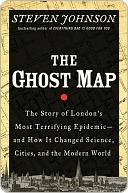
The Ghost Map
332 pages
A National Bestseller, a New York Times Notable Book, and an Entertainment Weekly Best Book of the Year from the author of Extra Life “By turns a medical thriller, detective story, and paean to city life, Johnson's account of the outbreak and its modern implications is a true page-turner.” —The Washington Post “Thought-provoking.” —Entertainment Weekly It's the summer of 1854, and London is just emerging as one of the first modern cities in the world. But lacking the infrastructure-garbage removal, clean water, sewers-necessary to support its rapidly expanding population, the city has become the perfect breeding ground for a terrifying disease no one knows how to cure. As the cholera outbreak takes hold, a physician and a local curate are spurred to action-and ultimately solve the most pressing medical riddle of their time. In a triumph of multidisciplinary thinking, Johnson illuminates the intertwined histories of the spread of disease, the rise of cities, and the nature of scientific inquiry, offering both a riveting history and a powerful explanation of how it has shaped the world we live in.


The Daughter of Time
224 pages
The Daughter of Time delves into the intriguing alleged crimes of Richard III, making it a captivating read for those who enjoy detective novels.

The Gulag Archipelago
691 pages
It's a powerful exploration of a man's harrowing experiences in the gulags, revealing the depths of human cruelty.
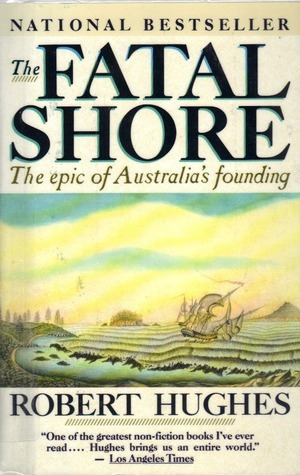
The Fatal Shore
754 pages
This book offers a very readable and comprehensive story about the origins of Australia's founding, detailing the early days of England's judicial system and the transportation of prisoners to Australia. It's so engaging that it reads like a 'Can't put down' novel.


The White Mouse
206 pages
This memoir tells the incredible story of one of WWII's most highly decorated women, showcasing her bravery as a special operations agent involved in an elaborate escape network for allied soldiers.

The Bad-Ass Librarians of Timbuktu
288 pages
This book is a captivating historical read that masterfully combines contemporary and ancient sub-Saharan history in a true story thriller.

The Inconvenient Indian
302 pages
A witty and well-written exploration of indigenous history and policy in North America that offers insightful perspectives.

We Wish to Inform You That Tomorrow We Will Be Killed With Our Families
385 pages
With an introduction by Rory Stewart Winner of the Guardian First Book award, a first-hand account one of the defining outrages of modern history. All at once, as it seemed, something we could have only imagined was upon us - and we could still only imagine it. This is what fascinates me most in existence: the peculiar necessity of imagining what is, in fact, real. In 1994, the Rwandan government orchestrated a campaign of extermination, in which everyone in the Hutu majority was called upon to murder everyone in the Tutsi minority. Close to a million people were slaughtered in a hundred days, and the rest of the world did nothing to stop it. A year later, Philip Gourevitch went to Rwanda to investigate the most unambiguous genocide since Hitler's war against the Jews. Hailed by the Guardian as one of the hundred greatest nonfiction books of all time, We Wish To Inform You That Tomorrow We Will Be Killed With Our Families is a first-hand account one of the defining outrages of modern history, an unforgettable anatomy of Rwanda's decimation. As riveting as it is moving, it is a profound reckoning with humanity's betrayal and its perseverance.

The Cold War
369 pages
“Outstanding . . . The most accessible distillation of that conflict yet written.” —The Boston Globe “Energetically written and lucid, it makes an ideal introduction to the subject.” —The New York Times The “dean of Cold War historians” (The New York Times) now presents the definitive account of the global confrontation that dominated the last half of the twentieth century. Drawing on newly opened archives and the reminiscences of the major players, John Lewis Gaddis explains not just what happened but why—from the months in 1945 when the U.S. and the U.S.S.R. went from alliance to antagonism to the barely averted holocaust of the Cuban Missile Crisis to the maneuvers of Nixon and Mao, Reagan and Gorbachev. Brilliant, accessible, almost Shakespearean in its drama, The Cold War stands as a triumphant summation of the era that, more than any other, shaped our own. Gaddis is also the author of On Grand Strategy.

Black Earth
481 pages
NEW YORK TIMES BESTSELLER • “[Timothy] Snyder identifies the conditions that allowed the Holocaust—conditions our society today shares. . . . He certainly couldn’t be more right about our world.”—The New Republic A “gripping [and] disturbingly vivid” (The Wall Street Journal) portrait of the defining tragedy of our time, from the #1 New York Times bestselling author of On Tyranny ONE OF THE BEST BOOKS OF THE YEAR—The Washington Post, The Economist, Publishers Weekly In this epic history of extermination and survival, Timothy Snyder presents a new explanation of the great atrocity of the twentieth century, and reveals the risks that we face in the twenty-first. Based on untapped sources from eastern Europe and forgotten testimonies from Jewish survivors, Black Earth recounts the mass murder of the Jews as an event that is still close to us, more comprehensible than we would like to think and thus all the more terrifying. By overlooking the lessons of the Holocaust, Snyder concludes, we have misunderstood modernity and endangered the future. The early twenty-first century is coming to resemble the early twentieth, as growing preoccupations with food and water accompany ideological challenges to global order. Our world is closer to Hitler’s than we like to admit, and saving it requires us to see the Holocaust as it was—and ourselves as we are. Groundbreaking, authoritative, and utterly absorbing, Black Earth reveals a Holocaust that is not only history but warning. New York Times Editors’ Choice • Finalist for the Samuel Johnson Prize; the Mark Lynton History Prize; the Arthur Ross Book Award
